

Non Toxic Face Moisturizer: What the Label Has to Show Before the Word Means Anything
A non toxic face moisturizer is one whose label you can read to the end and picture every line of: fats and butters at the top, the scent named instead of hidden behind one "fragrance" word, and little or no water, because water is what forces a preservative system onto the list. Nobody certifies the phrase. Under the FTC's Green Guides a "non-toxic" claim has to be backed by competent and reliable scientific evidence and is read as covering people and the environment, but no agency checks the jar before it ships. The word is a promise. The label is the proof. The face moisturizer we'd hand you today is the Beef Tallow Night Cream: a grass-fed beef tallow base with lavender and chamomile, the scent spelled out on the label, no synthetic fragrance, made in Eugene, Oregon.
That paragraph is the whole test. The rest of this page is how to run it in the thirty seconds you get in a store aisle or a product tab, why a face moisturizer deserves a stricter read than a body lotion, and why a jar of rendered grass-fed tallow keeps passing without trying.
What "non toxic" can actually mean on a face moisturizer
Start with what the phrase is not. It is not a certification, and no regulator signs off on it before the jar ships. The Federal Trade Commission's Green Guides say a non-toxic claim "likely conveys that a product, package, or service is non-toxic both for humans and for the environment generally," so a brand using it should hold "competent and reliable scientific evidence" for both. That is a high bar, and you cannot see from the front of the jar whether anyone cleared it. We don't print the phrase on ours for exactly that reason. We print the ingredients.
So take "non-toxic" as a reason to turn the jar around, not a reason to stop reading. The back panel is where the real information lives, and it is governed by a much more specific rule.
Is "non-toxic" on a skincare label regulated?
The claim is policed after the fact, by the FTC, if someone complains and the evidence turns out to be thin. The ingredient list is regulated up front. Under 21 CFR 701.3 every ingredient has to be named "in descending order of predominance," with two loopholes worth knowing. Anything at one percent or less can be listed in any order, and a scent blend can be declared as the single word "fragrance" without naming what is in it. The first loophole tells you where the real recipe ends. The second is the one that hides the most.
Non toxic face moisturizer: the four things the label has to show
Our five-point label test covers the whole bathroom shelf. A face moisturizer gets a tighter version, because this is the one product you wear on the thinnest, most visible skin you own, every day, under sunscreen and over nothing. Four checks.
1. Every ingredient named, scent included
Read the last four lines first. That is where a lone "fragrance" or "parfum" sits, and where the one-percent-or-less ingredients get shuffled out of order. A face moisturizer that passes names its scent: lavender essential oil, chamomile extract, vanilla. A face moisturizer that does not pass says "fragrance" and asks you to trust it. The American Academy of Dermatology tells people with dry or easily upset skin to buy products labeled "fragrance-free" specifically, and warns that "unscented" or botanical products can still carry fragrance-related ingredients. If you want zero scent, our fragrance-free moisturizer guide walks through the three checks that catch it.
2. Fats you could picture in the first five lines
Descending order means the first five lines are most of the jar. On a non toxic face moisturizer those lines should be fats and butters you can see in your head: grass-fed beef tallow, shea butter, cocoa butter, jojoba oil. The AAD's own shortlist of ingredients to look for in a cream names jojoba oil and shea butter. If line one is water and lines two through five are things you would need to look up, you are holding a lotion with a nice font. Our guide to the nine natural ingredients that earn their spot tells you which names further down the list are doing real work.
3. Little or no water, so little or no preservative system
This is the check that separates a face moisturizer from most of the aisle. Water is ingredient number one in nearly every lotion and most creams, and water needs guarding. A 2016 review of moisturizers in the Indian Journal of Dermatology puts the job plainly: preservatives "are meant to kill or inhibit the growth of microorganisms inadvertently introduced during use or manufacturing." That is a legitimate job. It is also where parabens, phenoxyethanol and the rest of the hard-to-pronounce tail come from, along with the emulsifiers that keep oil and water from separating. A balm or cream with no water in the formula has nothing growing in it, so it needs none of that. The list gets short because there is less to list. An antioxidant like vitamin E is what keeps the fats fresh. The water question is the whole difference between a moisturizer and a lotion, and it is why ours is a cream you warm, not a lotion you pump.
4. A cream or balm, not a lotion
Form follows the water. The AAD is blunt about which does more for dry skin: "Ointments and creams add more moisture to skin and are more effective than lotions." A fat-based face moisturizer is an occlusive and an emollient at once. It slows the water leaving your skin and it fills the gaps between the flakes, and it does both best when pressed onto skin that is still slightly damp. So the checklist ends with texture. If it pours, it is mostly water. If you have to warm it, it is mostly fat.

Why a tallow face moisturizer passes without trying
Your face already makes something a lot like tallow. Sebum, the oil your own glands produce, is 57.5% triglycerides and free fatty acids, 26% wax esters, 12% squalene and about 4.5% cholesterol and its esters, by the numbers in Picardo and colleagues' review of sebaceous gland lipids. Tallow is rendered beef fat, and a 2024 scoping review in Cureus on tallow's biocompatibility with skin describes it as "rich in triglycerides, specifically oleic acid, palmitic acid, stearic acid, and linoleic acid," carrying vitamins A, D, K, E and B12, with "hydrating and moisturizing properties." Palmitic, stearic, oleic and linoleic are the same fatty acids that review lists as key to the epidermis itself. That overlap is the point. A triglyceride-based fat is not a foreign object to facial skin. It is the same class of material your face is already coated in, minus the day.

Does beef tallow work as a face moisturizer, not just a body balm?
The face is the use tallow is best at. Facial skin is thinner, more exposed, and the first thing anyone sees, so it is where a water-based lotion falls shortest and where a long ingredient list gets the most chances to pick a fight. A tallow face moisturizer answers both at once: a short list of fats the skin recognises, in a form thick enough to stay put overnight. People who switch tell us the same two things, that it stops feeling like they are wearing anything within a few minutes, and that the morning face is softer than a lotion ever left it. Our post on the benefits of a tallow moisturizer goes through what is behind that feel, and the beef tallow for face page ranks every jar we make for the job.
How to use a non toxic face moisturizer so it earns its spot
Less than you think, onto damp skin, pressed rather than rubbed. The AAD's dry-skin advice is to apply moisturizer "when your skin is still damp after taking a shower or bath, after washing your hands, and when your skin feels dry," and a fat-based cream is the form that makes the most of that. The same 2016 moisturizer review notes that occlusives have "the most pronounced effect when applied to the slightly dampened skin." So wash, pat rather than towel, and go in while there is still a sheen.
A tallow cream is concentrated because none of it is water. A pea-sized amount, warmed between two fingertips until it turns clear, covers the whole face. Press it onto cheeks, forehead, chin and neck, then leave it alone for a minute. If your face still looks glossy ten minutes later, you used two faces' worth. Patch-test anything new the way the AAD describes: a quarter-sized spot on the underside of your arm or the bend of your elbow, twice a day for seven to ten days, and watch for redness or itch before it goes anywhere near your face.

Morning or night, or both?
Both, with a different job each time. In the morning it is the layer under sunscreen: cream first, two minutes to settle, then the SPF goes on top as the last step. We wrote the order up in sunscreen or lotion first, and the three-step morning routine is the whole thing in ninety seconds. At night it goes on heavier, with nothing over it, which is why the evening jar should be the richest one you own. Our night moisturizer guide explains why that slot matters most.
The jar we'd hand you
Beef Tallow Night Cream - Lavender & Chamomile
A richer evening tallow cream on a grass-fed beef tallow base, scented with lavender essential oil and chamomile extract, both named on the label rather than folded into a "fragrance" line. Built to be the last moisture step at night. No synthetic fragrance, no parabens, no mineral oil, no silicones, which is the standing "what's not in our products" list on our ingredients page. Edible-grade ingredients, like everything we make, made in Eugene, Oregon. Shop the Beef Tallow Night Cream, or pair it with a fragrance-free wash in the Night Cream + Unscented Soap duo.
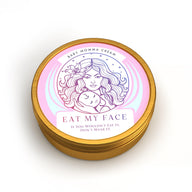
The Baby & Momma Cream is the fragrance-free one, built on grass-fed beef tallow, shea butter, cocoa butter, arrowroot powder, sea buckthorn oil, vitamin E, jojoba oil, fractionated coconut oil and cetyl alcohol.
For a daytime balm that does face, neck and body from one tin, the Aloe + Cucumber After Sun Balm is a tallow balm with no water in the formula, made for skin after outdoor days. Everything we make in a jar lives in the moisturizer collection.
Quick answers
What is a non toxic face moisturizer?
One whose label you can read to the end: fats and butters at the top, every scent named, and little or no water, so no preservative system riding along. "Non-toxic" itself is a marketing claim the FTC says must be backed by evidence, not a certification, so the ingredient list is the only part of the jar that proves anything.
What is the best non toxic face moisturizer?
The one with the shortest list of fats you recognise and a form you have to warm. Grass-fed beef tallow is the strongest base we know of, because its fatty acids and vitamins overlap with the skin's own. Ours for the face is the Beef Tallow Night Cream, a tallow base with lavender and chamomile named on the label.
Is beef tallow a good face moisturizer?
Yes, and the face is the use it suits best. Tallow is mostly triglycerides of oleic, palmitic, stearic and linoleic acid, the fatty-acid families the skin's outer layer is built from, and it carries vitamins A, D, K and E. A pea-sized amount, warmed and pressed onto damp skin, covers the whole face.
Is there a non toxic face moisturizer for men?
The same jar. Skin does not read the label on the box, and nothing in a tallow face cream needs a men's version. The Night Cream works the same on stubble as on a bare face: a pea-sized amount, warmed, pressed in after washing. Pair it with a bar of tallow soap and the whole routine is two steps.
Does a non toxic face moisturizer need a preservative?
Only if it has water in it. Preservatives exist to stop microorganisms growing in a formula, and water is what they grow in. A cream or balm with no water needs none, which is why its ingredient list stops after the fats, the butters and an antioxidant like vitamin E.
Can I get a non toxic face moisturizer with SPF?
Keep them as two steps. A moisturizer with SPF built in usually carries the sunscreen active, the water to spread it and the preservatives to guard that water. Put the tallow cream on first, wait two minutes, then apply a mineral sunscreen such as our SPF 30 tube as the last step. Our non toxic sunscreen guide runs the same label test on sun care.
Sources
- Federal Trade Commission. Guides for the Use of Environmental Marketing Claims, 16 CFR § 260.10, Non-toxic claims. Legal Information Institute, Cornell Law School. law.cornell.edu/cfr/text/16/260.10
- U.S. Food and Drug Administration. 21 CFR § 701.3, Designation of ingredients. Legal Information Institute, Cornell Law School. law.cornell.edu/cfr/text/21/701.3
- Russell MF, Sandhu M, Vail M, Haran C, Batool U, Leo J. Tallow, Rendered Animal Fat, and Its Biocompatibility With Skin: A Scoping Review. Cureus. 2024. PMC11193910. pmc.ncbi.nlm.nih.gov/articles/PMC11193910
- Picardo M, Ottaviani M, Camera E, Mastrofrancesco A. Sebaceous gland lipids. Dermato-Endocrinology. 2009. PMC2835893. pmc.ncbi.nlm.nih.gov/articles/PMC2835893
Ready to try it? Beef Tallow Baby & Momma Cream - Gentle Daily Moisture is in stock and ships fast — $24.99. 180 days to decide.

