

Morning Skincare Routine: The Three Steps That Actually Matter
A morning skincare routine needs three steps: clean, moisturize, protect. Rinse or cleanse with lukewarm water, put moisturizer on while your face is still damp, then finish with a broad-spectrum SPF 30 — about a teaspoon for the face alone, which is more than most people use. Ninety seconds, start to finish. Toner, essence, two serums, eye cream and a setting mist are all optional, and the morning is the wrong shift for most of them anyway. Daylight hours are for protecting the skin you already have. The repair work belongs to your night routine.
That is the whole answer. The rest of this page is why each of those three earns its spot, what to change when your skin refuses to behave like the one in the tutorial, and the step people skip that quietly undoes the other two.
The three steps that actually do something
Every morning routine you have ever seen is a variation on the same skeleton. Take something off. Put something back. Cover it up. The ten-step versions are not wrong so much as padded — they take that skeleton and add five products that do a slightly different version of step two.

1. Clean, or just rinse
The American Academy of Dermatology is blunt about this: "Limit washing to twice a day and after sweating," using lukewarm water, and "resist the temptation to scrub your skin because scrubbing irritates the skin." Nothing about a morning cleanse is sacred. You spent eight hours on a pillowcase, not in a coal mine. Unless you went to bed in makeup or woke up genuinely oily, plain water does the job, and the cleanser can wait until tonight when there is something real to remove.
If you do wash, be quick about it. A cleanser that leaves your face squeaky has taken more than you asked it for, and step two now has to put it back.
2. Moisturize while you are still damp
Moisturizers work in three ways and it pays to know which one is in your jar. Humectants — glycerin, hyaluronic acid — pull water toward the surface. Emollients, mostly oils and butters, settle into the gaps between skin cells and make everything feel smooth. Occlusives — petrolatum, beeswax, lanolin, tallow — lay a physical lid on top so the water stays put. The 2016 review Moisturizers: The Slippery Road is specific about the timing: occlusive oils "should be applied on moist skin." Towel off. Do not dry off.
That same review is also where our category gets humbled. Petrolatum at 5% or more cuts water loss through the skin by over 98%. Lanolin and mineral oil manage 20–30%. Nothing in a pretty jar has beaten plain petroleum jelly on that particular number, and any brand that tells you otherwise is selling you the jar.

3. Sunscreen, last, and more of it
This is the step with the most evidence behind it and the one most likely to get dropped when you are late. The AAD recommends a broad-spectrum sunscreen of at least SPF 30, "which blocks 97% of the sun's UVB rays," and is specific about the dose: "When applying sunscreen to your face, use at least 1 teaspoon (about the amount needed to cover the length of your index and middle fingers)." Outdoors, reapply about every two hours, or after swimming or sweating.
The same page notes that "no sunscreen can block 100% of the sun's UVB rays," which is the sort of sentence a sunscreen company would rather you skimmed past. We sell an SPF 30 mineral sunscreen and we will still tell you a hat and some shade are not redundant.
Order matters more than the products do
Thinnest to thickest. Water-based things first, oils and balms after, sunscreen over all of it. The logic is not mystical: an occlusive is designed to stop things passing through it, so whatever you apply after a balm is mostly sitting on a closed door.
Does moisturizer go on before or after sunscreen?
Before. Every time. Sunscreen is a film that needs to sit on the outside of everything else to do its job, and rubbing a moisturizer through it afterwards drags that film around. If your moisturizer is rich enough that the sunscreen pills into little grey rolls, wait two or three minutes between them. That pause fixes the problem about nine times out of ten, and it costs you less than switching products.
A morning skincare routine for dry, oily, and sensitive skin
Your skin type changes the middle step. It almost never changes the first or the last, which is why "what routine should I use" usually has a shorter answer than people expect.
What if my face is tight and flaky by 10am?
Your moisturizer is too thin, or it went on dry skin. Move up a texture — lotion to cream, cream to balm — and apply it straight out of the shower while your face is still wet. A tallow balm is a genuine occlusive, which is the category you want here; the full breakdown of how tallow behaves on skin covers why its fatty acid profile lines up so closely with what your own skin makes.
What if I am shiny by lunch?
Then the balm is working against you in daylight. Rich occlusives are a night product for oily and combination skin — run a light lotion in the morning, put the heavy stuff on before bed, and let your sunscreen sit on something that has already absorbed. This applies to ours too. A tallow balm under sunscreen at 7am is a lot of face for one morning if you were already producing plenty of your own oil.
What if my face reacts to half of what I put on it?
Shorten the list. Fragrance and a long ingredient deck are the two usual suspects, and the fastest way to find yours is to stop introducing products in pairs. Add one thing, give it two weeks, patch test it along the jaw first. If your skin keeps flaring no matter how short the list gets, that is a conversation for a dermatologist, not a blog.
Men, for what it is worth, get the same three steps — the skin is thicker and oilier on average, not different in kind. Our three-step version for men works around a beard and a razor, which is the only real complication.
Morning and night are two different jobs
The reason your morning list should be short is that it is doing defensive work. Sunscreen, a barrier layer, out the door. Nothing you apply at 7am gets a quiet, undisturbed eight hours to work.
Night is when the interesting products belong. Actives like retinol, richer balms, anything that makes skin temporarily more sun-sensitive, anything heavy enough to transfer onto a collar. Split your shelf that way and both halves get easier: the morning becomes a reflex you can do half-asleep, and the evening becomes the five minutes where you actually pay attention.
Where tallow fits, and where it doesn't
Tallow is our answer to step two, and only step two. It is a moisturizer. It is not a cleanser, it is not a serum, and it carries no SPF whatsoever — melted beef fat is lovely on dry skin and does nothing at all about ultraviolet light.

Here is the part we would rather bury. The most recent scoping review of tallow on skin, published in Cureus in 2024, found that tallow "alone had the most moisturizing impact when applied to the skin" — and in the same breath its authors wrote that "there are significant research gaps in how it can be used on human skin," calling for randomized controlled trials that do not yet exist. We think the lipid argument is strong and our customers keep reordering. We are not going to dress that up as settled science while petrolatum has the better number and the bigger pile of studies.
What tallow has going for it is that one jar handles face, neck and hands, and the ingredient list stays short enough to read in a breath. If a single step is genuinely all you will do on a weekday, the one-product version of this morning routine is the honest floor — still with sunscreen over the top.
Step two, handled.
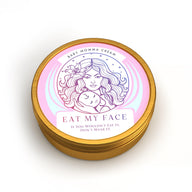
Grass-fed tallow, cocoa butter, jojoba, sea buckthorn and vitamin E in a 4 oz tin. No water in the formula, no synthetic fragrance, made in small batches. Warm a little between your palms and press it onto damp skin — face, neck, hands, done.
Quick answers
What is the correct order for a morning skincare routine?
Cleanse or rinse, then moisturizer, then sunscreen. Within that, go thinnest to thickest: any water-based product first, oils and balms next, SPF over everything. Sunscreen is always the final layer because it has to form an unbroken film on the outside.
Do I need to wash my face in the morning?
Not necessarily. The AAD advises limiting washing to twice a day and after sweating, so a morning cleanse is a choice, not a rule. If you wake up oily or slept in makeup, cleanse. Otherwise lukewarm water is enough, and skipping the cleanser leaves your barrier alone.
How long should a morning skincare routine take?
Around ninety seconds. Fifteen seconds to rinse, fifteen to press in moisturizer, and the rest on sunscreen, since a teaspoon on the face takes longer to spread than people allow for. Anything longer is a hobby, which is fine, but it is not doing more for your skin.
Can I skip moisturizer if I use sunscreen?
You can, and plenty of people with oily skin do. Many sunscreens are moisturizing enough to stand alone. If your face feels tight an hour later, though, you skipped a step your skin wanted — add a thin layer on damp skin before the SPF.
What is the simplest morning skincare routine that still works?
Splash lukewarm water, press a fingertip of moisturizer into damp skin, then a teaspoon of SPF 30. Three products, one of which is water. Every additional step should have to explain its job before it earns a place on the counter.
Should my morning routine be different from my night routine?
Yes. Mornings are defensive — protect the barrier, get sunscreen on, leave. Nights are when actives like retinol and heavier balms belong, because they get eight undisturbed hours and no sun exposure. Same face, two different jobs.
Sources
- American Academy of Dermatology — Face washing 101
- American Academy of Dermatology — Sunscreen FAQs
- Sethi A, Kaur T, Malhotra SK, Gambhir ML. Moisturizers: The Slippery Road. Indian J Dermatol, 2016 (PMC4885180)
- Russell MF, et al. Tallow, Rendered Animal Fat, and Its Biocompatibility With Skin: A Scoping Review. Cureus, 2024 (PMC11193910)
Ready to try it? Beef Tallow Baby & Momma Cream - Gentle Daily Moisture is in stock and ships fast — $24.99. 180 days to decide.


