

Natural Ingredients in Skin Care Products: 9 That Earn Their Spot on the Label
The natural ingredients in skin care products that do the most work are fats and waxes your skin already recognizes: grass-fed tallow, shea butter, cocoa butter, jojoba oil and beeswax, with vitamin E and sea buckthorn oil in support. "Natural" has no legal definition on a cosmetic label, so the word on the front tells you nothing. The ingredient list on the back tells you everything, because it's printed in order of how much of each thing is in the jar.
So this is a guide to the back of the jar. Which natural ingredients are worth paying for, where they should sit on the list, and how to spot a product that put a leaf on the box and a teaspoon of plant extract in the formula.
What "natural" means on a label (flip the jar over)
No US regulation defines "natural" for cosmetics. A brand can print it on anything. Same goes for "clean," which we pulled apart in what clean skin care means on a label. "Non-toxic" is a little different: the FTC wants evidence behind it, but nobody approves it before it is printed, so the same rule applies (here is our five-point label test for non toxic skin care products). And every substance is a chemical, water included, which is why "chemical-free" describes no product that has ever existed.
The ingredient list is different. That part is regulated. Federal labeling rules (21 CFR 701.3) require cosmetic ingredients to be declared in descending order of predominance, so whatever is listed first is what the jar is mostly made of. Two wrinkles are worth knowing. Anything present at 1 percent or less can be listed in any order after the bigger ingredients, and a scent blend can be declared with the single word "fragrance."
Put those together and a label reads like a story with a beginning, a middle and an end.

This is how you catch the leaf-on-the-box trick. If the front says "with shea butter and jojoba" and both appear below the fragrance, they're in there at a whisper. If they're in the first few names, they're the product.
The natural ingredients in skin care products worth paying for
Start with what your skin makes for itself. Sebum, the oil your face produces all day, has a known recipe. According to a review of sebaceous gland lipids in Dermato-Endocrinology, triglycerides and fatty acids together make up 57.5 percent of it, wax esters 26 percent, squalene 12 percent, and cholesterol with its esters 4.5 percent.

That recipe is the best shopping list you'll ever get. The natural ingredients that perform are the ones made of the same stuff: fats built from skin-familiar fatty acids, and wax esters. Everything below earns its place by that test.
What natural ingredients should I look for in a moisturizer?
- Grass-fed tallow. Rendered beef fat, rich in oleic, palmitic and stearic acid. Those are the same fatty acids found in the skin's own barrier, which is the whole biocompatibility argument in one sentence.
- Shea butter. A dense plant butter carrying triterpenes and other unsaponifiable compounds with antioxidant properties, per a 2017 review of plant oils in the International Journal of Molecular Sciences. It's also on the American Academy of Dermatology's list of ingredients to look for in a dry-skin moisturizer.
- Cocoa butter. Firm in the tin, melts at skin temperature. It gives a balm body and a slow, lasting finish.
- Jojoba oil. Technically a liquid wax. The same review credits its high wax ester content for making it a good fit for skin that needs barrier support, and wax esters are a quarter of your sebum. The AAD lists it too.
- Coconut oil. In a trial cited by that review it was as effective and safe as mineral oil for dry skin. A little goes into a blend for slip.
- Beeswax. A natural wax that sits on the surface and slows water leaving the skin. It's what gives a balm staying power on hands and lips.
- Sea buckthorn oil. The bright orange one. The color comes from carotenoids, and a few drops tint a whole batch.
- Vitamin E (tocopherol). An antioxidant that keeps the other oils from going rancid. In a water-free formula it does the job a preservative does elsewhere.
- Non-nano zinc oxide. A mineral, and the natural ingredient doing the UV work in a mineral sunscreen. We covered the short list of what belongs in one in clean sun care: the 6 ingredients that matter.
Water-loving ingredients like glycerin, aloe and honey pull moisture toward the skin, and they're worth having when a fat or wax sits on top of them to hold that water in. On their own they're half a moisturizer.
Why tallow goes first on our list
We're biased. We're also right. A 2024 scoping review in Cureus looked at the published research on tallow and skin and described it as rich in triglycerides, specifically oleic, palmitic, stearic and linoleic acid, along with fat-soluble vitamins including A, D, E and K. The same paper points out that the main lipids in the skin's protective barrier are cholesterol, free fatty acids and ceramides, and that tallow's main fatty acids are among the ones that occur there naturally.
Plant butters get close to that profile. Tallow arrives with it. Your skin already makes something a lot like it, and we just tin the grass-fed version. That's why a small amount melts in instead of sitting on the surface like a film, and why people tell us their face stops feeling tight by mid-afternoon. There's a longer walk through the fatty acids in our beef tallow for skin guide.
It's also about as traditional as an ingredient gets. People were rendering tallow for skin long before anyone invented a lotion pump. And it lets us keep formulas short. What goes into our products, and why each thing is there, is laid out on our ingredients page.
Natural scent is still scent
Essential oils are natural ingredients, and in soap and body products they're a pleasure. Bergamot in the shower is a good way to start a day. They are also concentrated scent compounds, and the AAD's advice for dry or reactive skin is plain: dermatologists recommend products labeled "fragrance-free."
That advice doesn't carve out an exception for plant-derived scent, so treat it as a fork in the road. If your skin is easygoing, a lightly scented natural moisturizer is fine, and ours carries a small amount of real vanilla. If your skin argues with everything, pick the jar with no scent at all and let the fats do the talking. We wrote more on that in our guide to natural moisturizers for reactive skin.

How to use a moisturizer with natural ingredients
Fat-based balms behave differently from the pump lotions most of us grew up with. They contain no water, so there's nothing to evaporate and nothing diluting the good stuff. A pea-sized amount covers a face. Use a lotion-sized scoop and you'll be shiny until Thursday.
Two habits make the difference, and both come straight from the AAD. Apply while your skin is still damp after washing, so the fats seal that water in. And choose the thicker format when you have the choice: the Academy notes that ointments and creams add more moisture to skin and are more effective than lotions. A water-free tallow balm sits at the rich end of that range. Warm it between your fingers for a few seconds, press it in, and give it a minute before makeup or a pillowcase.
Quick answers
What natural ingredients should I look for in moisturizers?
Look for fats and waxes near the top of the list: grass-fed tallow, shea butter, cocoa butter, jojoba oil and beeswax. Those do the moisturizing. Vitamin E and sea buckthorn oil are good supporting names lower down. If the first ingredient is water, you're mostly paying for water.
Are natural ingredients in skin care products better than synthetic ones?
Where an ingredient comes from matters less than what it's made of. The natural fats worth buying are built from the same fatty acids and wax esters as your skin's own oil, which is why they sink in and feel like they belong there. That match is the real argument for them, and it's a better one than the word natural on the front of the box.
What is the best natural ingredient for moisturizing skin?
Grass-fed tallow is our pick, and we'd say that even if we didn't pour it for a living. A 2024 scoping review describes it as rich in oleic, palmitic and stearic acid, the same fatty acids found in the skin's own barrier, with hydrating and moisturizing properties. Shea butter and jojoba oil are strong seconds, and they work even better alongside it.
Do natural skin care products need preservatives?
It depends on water. Anything with water in it, like a lotion or an aloe gel, needs a preservative system because microbes grow in water. A balm made only of fats, butters and waxes contains no water, so vitamin E to keep the oils fresh is usually all it needs.
Which natural ingredients work for men's skin?
The same ones. Skin doesn't read the marketing on the bottle. Tallow, shea butter and jojoba oil suit a face that gets shaved and a pair of hands that do real work, and a fat-based balm uses so little per application that one tin lasts months.
Is fragrance from essential oils still fragrance?
Yes. Lavender, citrus and peppermint oils are natural, and they are still scent compounds sitting on your skin. Most people enjoy them with no trouble. If your skin is reactive, the American Academy of Dermatology's advice is to choose products labeled fragrance-free, and that applies to natural scent too.
Read our label. We dare you.
The Original Beef Tallow Moisturizer is eleven organic ingredients and no water: grass-fed beef tallow, shea butter, cocoa butter, arrowroot powder, sea buckthorn oil, vitamin E, jojoba oil, coconut oil, cetyl alcohol (a waxy fatty alcohol, the softening kind), beeswax and a touch of vanilla. Made in small batches in the USA. A pea-sized amount does your whole face, so a tin runs two to three months of daily use.
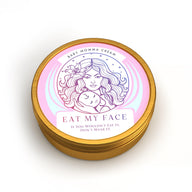
Want zero scent? The Baby & Momma Cream is the fragrance-free one, built on grass-fed beef tallow, shea butter, cocoa butter, arrowroot powder, sea buckthorn oil, vitamin E, jojoba oil, fractionated coconut oil and cetyl alcohol. Made for the most sensitive skin in the house. If you wouldn't put it in your mouth, why put it on your face?
Sources
- Picardo M, Ottaviani M, Camera E, Mastrofrancesco A. "Sebaceous gland lipids." Dermato-Endocrinology, 2009. pmc.ncbi.nlm.nih.gov/articles/PMC2835893
- Lin TK, Zhong L, Santiago JL. "Anti-Inflammatory and Skin Barrier Repair Effects of Topical Application of Some Plant Oils." International Journal of Molecular Sciences, 2017. pmc.ncbi.nlm.nih.gov/articles/PMC5796020
- Russell MF, Sandhu M, Vail M, et al. "Tallow, Rendered Animal Fat, and Its Biocompatibility With Skin: A Scoping Review." Cureus, 2024. pmc.ncbi.nlm.nih.gov/articles/PMC11193910
- American Academy of Dermatology. "Dermatologists' top tips for relieving dry skin." aad.org
Ready to try it? Beef Tallow Baby & Momma Cream - Gentle Daily Moisture is in stock and ships fast — $24.99. 180 days to decide.


