

Sunscreen or Lotion First? The Order That Keeps Your SPF Working
Sunscreen or lotion first: lotion, every time. Smooth your moisturizer onto clean skin, give it two or three minutes to settle, then apply sunscreen as the last skincare layer, about 15 minutes before you head outside. Makeup, if you wear it, goes on top. The SPF on the label was measured on an even, unbroken film of sunscreen, and anything you rub in after it thins that film out.
That's the rule, and it holds for face lotion, body lotion, rich creams and tallow balms, with mineral and chemical sunscreens alike. What decides whether the order actually pays off is everything around it: how long you wait, how much you use, why an SPF moisturizer usually comes up short, and the two spots on your face most people skip.
Sunscreen or lotion first? The order, step by step
The American Academy of Dermatology keeps its version short. Wash your face, apply any medicated or treatment product, then moisturizer and/or sunscreen, then makeup. Their point is that the order you apply things in changes how well each one works. On a normal morning it looks like this:
- Cleanse. A gentle cleanser, or just lukewarm water if you run dry. Pat, don't scrub.
- Serums and actives. Thin, watery products go on bare skin so they actually touch it.
- Lotion or moisturizer. Press it onto slightly damp skin. This is the layer that keeps your face comfortable until dinner.
- Wait. Two or three minutes for a rich cream or balm, about one for a thin lotion.
- Sunscreen. At least a teaspoon for the face, spread evenly.
- Makeup. Pat it on instead of buffing hard, so the sunscreen underneath stays where you put it.
Everything before sunscreen is there to feed or calm your skin, so it needs to touch your skin. Sunscreen is the one step whose whole job happens on the surface, so it goes where nothing else will rub through it.

What comes first, sunscreen or moisturizer?
Same question, different word. A lotion is one kind of moisturizer: thin, water-heavy, usually pumped from a bottle. Creams carry less water, and a tallow balm is typically all fat with no water at all (here's how lotion, cream and balm actually differ). Whatever is in your jar, it goes under the sunscreen.
Why sunscreen has to be the last layer
A serum works once it sinks in. Sunscreen works as a coat. The AAD describes chemical, physical and hybrid formulas the same way: they all "form a protective layer on your skin that absorbs the sun's rays." That layer is the product. Rub moisturizer in over the top and you drag it around, thinning it in some places and wiping it off in others.
Thickness matters more than you would guess. In the FDA's SPF test, sunscreen goes on at 2 milligrams per square centimeter of skin, a generous coat you can almost see. Dermatologists ask for at least a teaspoon on the face alone, which is more than most people use (we ran the numbers in how much sunscreen you actually need). Smudging that film afterward only makes the shortfall worse.
The AAD's instruction hides one more detail: apply sunscreen "to dry skin." A moisturizer that's still wet when sunscreen lands on it mixes in instead of sitting underneath. That's what the wait is for.
Does chemical sunscreen go on before moisturizer?
Older advice said chemical filters need bare skin to soak into, so they should go first. Current guidance doesn't split them that way. The AAD groups chemical, physical and hybrid sunscreens together as a layer that absorbs UV, and its skin care routine places sunscreen after cleansing and treatment and before makeup, with no separate rule for chemical filters. With mineral sunscreen the case is even simpler. Non-nano zinc oxide stays on top of the skin and absorbs UV right there, so it belongs on the outside (the longer version is in zinc oxide vs chemical sunscreen).
How long to wait between moisturizer and sunscreen
Two or three minutes for a rich cream or tallow balm. About a minute for a thin lotion. Touch is the test: when your skin feels soft rather than slick, you're ready. If your sunscreen balls up into little grey pills, the layer underneath was still wet or there was more of it than your skin wanted, so wait longer or use less next time. Then give the sunscreen itself about 15 minutes before you walk out the door. That's the AAD's number, and it's the standard direction on US sunscreen labels too.
Where tallow fits in the order
Tallow is a moisturizer, so it takes the moisturizer slot. Grass-fed beef tallow is mostly oleic, palmitic and stearic acid, fats that closely mirror the lipids your skin already makes. It sinks in like it belongs there, and a pea-sized amount does the whole face. Warm it between your fingertips, press it onto slightly damp skin, and give it those two or three minutes before sunscreen.
Here's the part that makes mornings easier: our SPF 30 mineral tube is built on tallow too. The label lists non-nano zinc oxide first, then grass-fed beef tallow, with shea butter, cocoa butter, jojoba oil and sea buckthorn oil further down. So it goes on as the final step and still feels like skincare. On a normal-skin morning it can cover both steps in one pass. On a dry or wind-chapped day, put a tallow cream on first and the tube on top. The zinc handles the sun; the tallow keeps your face soft while it does.
Moisturizer with SPF, mixing, and other shortcuts
Is a moisturizer with SPF enough?
On paper, yes, if it's SPF 30 and you use a sunscreen-sized amount. In practice, people don't. A 2019 study in PLoS One photographed 84 people under a UV camera after they applied sunscreen on one visit and an SPF moisturizer on another, each their usual way with no coaching. With the moisturizer they missed 16.6% of the face on average, against 11.1% with sunscreen. On the eyelids it was 20.9% versus 14.0%. The researchers' best explanation was the plain one: people put less moisturizer on.

So an SPF moisturizer is fine for the walk to the car. For a beach day or a hike, wear an actual sunscreen at an actual dose, over your moisturizer.
Can you mix sunscreen into your moisturizer?
Please don't. Blending them in your palm turns a teaspoon of sunscreen into a teaspoon of something that's only partly sunscreen, spread over the same face. The SPF on the label was earned by undiluted product at that 2 mg per square centimeter, so every drop of moisturizer you stir in quietly lowers what you get. Layer them instead. It costs you two minutes.
Body lotion or sunscreen first?
Same order, bigger canvas. Body lotion goes on after the shower while skin is still a little damp, and sunscreen goes on once the lotion has sunk in. The AAD's minimum for an adult body is about an ounce, roughly a shot glass. Short on time? Skip lotion on anything that'll be under clothes and save it for the evening.
Oily skin: do you still need moisturizer under sunscreen?
Usually a light one. Oily and well-moisturized aren't the same thing, and skin can feel greasy and tight at the same time. Keep the layer thin and let it settle fully before sunscreen. You can also skip the separate step and let a moisturizing sunscreen do both jobs. There's more on picking one in the best sunscreen for oily skin.
How to apply sunscreen on your face (and the spots everyone misses)
Dose comes first. The AAD asks for at least a teaspoon on the face, about enough to cover the length of your index and middle fingers. Squeeze two finger-lengths, dot it across your forehead, cheeks, nose and chin, then spread outward toward the hairline and ears.
Then go after the gaps. In that same UV-camera study, 66 of 84 people (78%) failed to cover the inner corner of the eye, the little hollow beside the bridge of the nose, and they missed it just as badly with sunscreen as with SPF moisturizer. Eyelids got skipped more than the rest of the face too. Close your eyes, tap a thin layer over the lids, and use a fingertip to press it into that inner corner. While you're there, take it down the sides and back of the neck.

Outdoors, reapply about every two hours and right after swimming or sweating. If you want the whole morning laid out, our three-step morning skincare routine takes about 90 seconds.
Quick answers
Do you apply sunscreen before or after moisturizer?
After. Moisturizer goes on clean skin first, then sunscreen once the moisturizer has settled for a couple of minutes. Sunscreen is the last skincare layer, and only makeup goes over it.
Does sunscreen go on before or after makeup?
Before. The AAD's order is cleanse, treat, moisturizer and/or sunscreen, then makeup. Pat foundation on rather than rubbing it in, so the sunscreen film underneath stays even.
Should you apply sunscreen 30 minutes before going outside?
Fifteen minutes is the AAD's guidance, and it's the standard direction on US sunscreen labels. Earlier is fine, but there's no need to wait half an hour. Using enough and reapplying every two hours outdoors matters more than the head start.
Can you put sunscreen on your face without moisturizer?
Yes. Sunscreen works on clean, bare skin, and one built on a moisturizing base like tallow and plant butters can cover both steps. If your skin runs dry, a separate moisturizer underneath will feel better by afternoon.
Sunscreen or bug spray first?
Sunscreen first, repellent on top, which is the order the CDC recommends. Worth knowing: a 2025 study in Parasites & Vectors found that layering an IR3535 mosquito repellent over sunscreen on human skin samples significantly cut the sunscreen's UVB protection. On bug-and-sun days, lean on shade and clothing as well.
How often should you reapply sunscreen on your face?
Every two hours when you're outdoors, and right after swimming, sweating or toweling off. You don't need to wash off your moisturizer or makeup first. Press a fresh layer on over whatever is there.
The last layer, made like skincare
The Eat My Face SPF 30 Mineral Sunscreen tube is broad-spectrum SPF 30 with non-nano zinc oxide as its only active, set in grass-fed beef tallow with shea butter, cocoa butter, jojoba oil and sea buckthorn oil. It's water resistant for 80 minutes and moisturizing enough to be the only layer on a normal-skin morning.
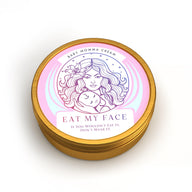
Want a cream for the moisturizer step? The Baby & Momma Cream is the fragrance-free one, built on grass-fed beef tallow, shea butter, cocoa butter, arrowroot powder, sea buckthorn oil, vitamin E, jojoba oil, fractionated coconut oil and cetyl alcohol.
Sources
- American Academy of Dermatology. "Should I apply my skin care products in a certain order?" aad.org
- American Academy of Dermatology. "Sunscreen FAQs." aad.org
- Lourenco EAJ, Shaw L, Pratt H, Duffy GL, Czanner G, Zheng Y, Hamill KJ, McCormick AG. "Application of SPF moisturisers is inferior to sunscreens in coverage of facial and eyelid regions." PLoS One, 2019. PMC6447356
- Code of Federal Regulations. 21 CFR 201.327, "Over-the-counter sunscreen drug products; required labeling based on effectiveness testing." law.cornell.edu
Ready to try it? Beef Tallow Baby & Momma Cream - Gentle Daily Moisture is in stock and ships fast — $24.99. 180 days to decide.


