

Is Beef Tallow Healthy? Skin, Kitchen, and the Science
Beef tallow is healthy in a narrow, specific way, and the answer changes depending on where you're putting it. On skin, yes for most people: tallow is an emollient built from the same fatty acids your own skin already secretes, and most people tolerate it well as a daily moisturizer. In a pan, it's a stable cooking fat at roughly 50% saturated fat — fine in ordinary amounts, but not a health food, and the strongest trial evidence still favors swapping some saturated fat for polyunsaturated fat. What tallow is not: it's no substitute for sunscreen, it won't erase wrinkles, and on breakout-prone skin it can feel like far too much.
That's the whole answer. The rest of this is the reasoning, the actual numbers, and the parts we'd rather you knew before you buy anything from us.
Is beef tallow healthy? The two-part answer
"Is beef tallow healthy" is really two questions wearing one coat. Half the people typing it are standing in a kitchen holding a tub of rendered beef fat. The other half just watched someone smear it on their face on TikTok and want to know if that's insane. The answers aren't the same, and mashing them together is how bad advice gets made.
Is beef tallow healthy to cook with?
It's stable, and it's honest about what it is. USDA food composition data puts beef tallow at about 50 g of saturated fat per 100 g, around 42 g monounsaturated, and only about 4 g polyunsaturated. Butter sits at 51 g saturated. Coconut oil is 82. Olive oil is 14, canola 7. That very low polyunsaturated share is the real argument for cooking with tallow: there's little in it that wants to oxidize when it gets hot.

Here's the part the tallow corner of the internet tends to skip. The Cochrane review of randomized trials — the highest-quality evidence we have on this — found that cutting saturated fat and replacing it with polyunsaturated fat reduced cardiovascular events by about 21%, with little or no effect on overall mortality. The effect is modest but real: roughly 56 people had to make that swap for four years for one cardiovascular event to be avoided. So tallow in the pan isn't the villain it was in 1985, and it isn't the superfood your feed says it is. It's a fat. Cook with it, don't build a personality around it.
Is beef tallow healthy for your skin?
This is the half where we actually have standing, because it's what we make. Tallow is an emollient and an occlusive — it fills the gaps between surface skin cells and slows the water leaving them. For dry, tight, over-washed, wind-beaten skin, that's most of what "healthy" means in practice. It's also a short, recognizable ingredient list, which matters more than people admit if your skin reacts to a lot of things. We go deeper on the mechanism in tallow skincare benefits.
Why tallow sits well on skin, and the part that gets oversold
You've read that tallow "matches your skin's own oil." That's close enough to be useful and not close enough to be true. Human sebum is squalene, wax esters, triglycerides and small amounts of cholesterol. Tallow is essentially all triglycerides — no squalene, no wax esters. The overlap is in the fatty acids themselves: oleic, palmitic and stearic show up in both, which is why tallow spreads and sinks in like something your face recognizes rather than sitting on top of it.
The bigger correction, and we'd rather say it than have you find out later: your skin barrier isn't made of sebum. The permeability barrier lives in the stratum corneum, in a matrix of ceramides, cholesterol and fatty acids, and the surface lipids from sebum look to be doing antimicrobial work more than waterproofing. Tallow supports that barrier the way a good coat supports your body temperature. It doesn't rebuild the thing underneath.
Second honest thing, and this one costs us something. The fatty acid tallow gets credited for is also the one that can misbehave. In a controlled study, pure oleic acid applied to human skin raised transepidermal water loss and let a tracer dye penetrate further, while glyceryl trioleate — the same fatty acid locked inside a triglyceride — did not. Fresh, well-rendered tallow is triglycerides, which is the good column. Old, badly rendered or rancid tallow carries more free fatty acids, which is the other one. If a tub smells like a hot pan, don't put it on your face.

Beef tallow and the sun: sunscreen, sunburn, and the limits
Can beef tallow be used as sunscreen?
No, and this is the question we most want people to get right. Plain tallow contains no UV filter, so any SPF number attached to a raw rendered fat is somebody's guess. The American Academy of Dermatology's guidance is broad-spectrum, SPF 30 or higher, water resistant — roughly an ounce for your whole body, about a teaspoon for your face, reapplied every two hours or after swimming or sweating. A jar of fat does none of that. We wrote a whole post on the why: does beef tallow work as sunscreen.
What turns a tallow sunscreen into an actual sunscreen is the mineral suspended in it. Zinc oxide is the ingredient doing the UV work; the tallow is the base that carries it and keeps it from feeling like drywall. Our SPF 30 mineral sunscreen is non-nano zinc oxide in a grass-fed tallow base.
Is beef tallow good for sunburn?
Timing is the whole answer. Sunburned skin is hot and inflamed, and sealing it under a heavy fat in the first hours traps heat exactly where you don't want it. The AAD's after-sun order of operations is cool baths or showers first, then a moisturizer with aloe or soy while the skin is still damp, plus extra water, since a burn pulls fluid toward the surface and away from everywhere else. Tallow's moment comes a day or two later, at the tight, itchy, flaking stage, when what the skin wants is something occlusive holding moisture in. That's the job our aloe and cucumber after sun balm was built for. If skin is broken or raw, or you feel genuinely unwell, skip the balm and call your doctor.

Wrinkles, hair, and the rest of the claims
Does beef tallow really work for wrinkles?
It works the way any good moisturizer works on lines: cosmetically, and temporarily. Dehydrated skin creases more visibly, so put water back into it and hold it there and fine lines look softer within a few days. That's a genuine improvement in appearance. It's also the ceiling. Tallow contains no active that restructures collagen, so set-in lines stay set in, and anyone selling you tallow as a swap for that is selling you a story instead of a jar. If measurable change in deep lines is the goal, that's a conversation with a dermatologist, not with us.
Is beef tallow good for hair?
For dry ends and a dry, flaky scalp, a small amount works — and "small" is carrying that whole sentence. Warm a pea-sized amount between your palms, work it through the bottom third of your hair, leave it an hour or overnight, then shampoo twice. Use more than that and you'll spend three washes getting it back out. A beef tallow hair cream, for what it's worth, is usually just tallow with a lighter oil cut into it so it spreads further. The full routine is in is beef tallow good for hair.
What "best beef tallow" actually means
Four things, roughly in order of how much they matter.
- Grass-fed and grass-finished. Grass-finished matters as much as grass-fed, because plenty of "grass-fed" cattle finish on grain. It shifts the fat's minor components, and it's the one sourcing detail worth paying for. More on that in grass-fed beef tallow for skin.
- It smells like almost nothing. Well-rendered tallow is close to odorless. A beefy or hot-pan smell means free fatty acids, and you already know how that story ends.
- An ingredient list you can read out loud. Tallow plus a couple of butters and oils is a formula. Tallow plus fourteen things you'd have to look up is a fragrance delivery system.
- Packaging that isn't slowly cooking it. Opaque, sealed, and stored somewhere that isn't a sunny bathroom windowsill.
Quick answers
Is beef tallow healthy to use on your face every day?
For most people, yes, once a day is fine. Night is the easiest slot, since tallow is occlusive and leaves a slight sheen. Start with less than you think you need — a rice-grain amount for the whole face — and patch test on your inner forearm for two days first if your skin is reactive.
Does beef tallow work as sunscreen?
No. Tallow contains no UV filter, so it can't carry an SPF on its own. If you want sun protection from a tallow product, the formula has to contain a mineral filter like zinc oxide, and it has to be tested and labeled with an SPF number.
Is beef tallow good for sunburn?
Not in the first hours. Cool the skin, drink water, and use a light aloe-based moisturizer while the skin is still damp. Once the burn has cooled and the skin starts flaking, a tallow balm is a reasonable choice for holding moisture in.
Does beef tallow really work for wrinkles?
It softens how fine lines look by rehydrating the skin around them, usually within a few days. That effect is cosmetic and it fades if you stop using it. Deeper lines need actives that tallow simply doesn't contain.
Is beef tallow good for hair?
For dry ends and a dry scalp, yes, used sparingly and washed out afterwards. It's heavy, so a pea-sized amount through the bottom third of the hair is plenty, and plan on shampooing twice to clear it.
Is beef tallow good for eczema?
That's outside what a cosmetic moisturizer gets to claim, so we won't claim it. What we can say is that dry, compromised skin generally does better under an occlusive than bare. If you have eczema, talk to your dermatologist about where a plain balm fits alongside whatever they've already got you using.
Want the simple version of all this?
Our Original Beef Tallow Moisturizer is grass-fed tallow with shea and cocoa butter, jojoba and a little vitamin E — edible-grade ingredients, no synthetic fragrance, and a texture that behaves once you use less than you think you need. Start on hands and shins if you're not sure about your face yet.
Sources
- Lipids and the Permeability and Antimicrobial Barriers of the Skin — Journal of Lipids, 2018 (sebum composition; where the permeability barrier actually lives).
- Molecular interactions of plant oil components with stratum corneum lipids correlate with clinical measures of skin barrier function — Experimental Dermatology, 2013 (free oleic acid raised TEWL; the same fatty acid in triglyceride form did not).
- Reduction in saturated fat intake for cardiovascular disease — Cochrane Database of Systematic Reviews, 2020.
- Sunscreen FAQs — American Academy of Dermatology (SPF 30+, broad spectrum, water resistant, how much and how often).
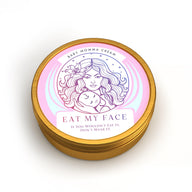
Ready to try it? Beef Tallow Baby & Momma Cream - Gentle Daily Moisture is in stock and ships fast — $24.99. 180 days to decide.


