

Unscented Lotion: What's Hiding in the Bottle (and the Fragrance-Free Cream We Make Instead)
The best unscented lotion is one that says "fragrance-free" on the label, not just "unscented," and has no "fragrance," "parfum" or scented botanical oil anywhere in its ingredient list. "Unscented" only describes how a bottle smells, and the American Academy of Dermatology warns that an unscented product can contain chemicals added to hide the smell of everything else. If your skin is dry, go one step further and skip the watery bottle: the AAD says creams and ointments add more moisture than lotions. A water-free, fragrance-free tallow cream does a lotion's job better, with nothing in it that needs covering up.
That's the whole answer. The rest is how to spot the difference in about thirty seconds, why so many "unscented" bottles quietly contain a scent, and how to use a thick cream like a body lotion without feeling greasy.
Unscented lotion vs fragrance-free lotion: the word that matters
Two labels that sound identical on a shelf mean different things. "Fragrance-free" is a promise about what went in: nothing added to make it smell like something. "Unscented" is a promise about what comes out: it doesn't smell like much. You'd think one leads to the other. It often doesn't.
The AAD's dry-skin guidance spells it out: "Dermatologists recommend using products labeled 'fragrance-free.' If you see the word 'unscented,' the product can contain chemicals that neutralize or hide the odors of other ingredients." So the gentler-sounding word is the one to be suspicious of.
Is unscented lotion the same as fragrance free?
No. A lotion can be both, and the good ones are, but only "fragrance-free" tells you anything about the ingredient list. If a bottle says unscented and the list ends in "fragrance," you've found the masking agent. We went deep on this split for face creams in our fragrance-free moisturizer label checks; this post is the body-lotion cut.
What's actually inside a bottle of unscented lotion
Flip a typical lotion over and the first ingredient is almost always water. That's what makes it pump easily and spread across a whole leg in two strokes. It's also what sets off a chain of other ingredients you didn't ask for.
Oil and water don't mix on their own. A review of moisturizer formulation in the Indian Journal of Dermatology puts it simply: "The natural tendency of any oil and water to separate in different phases is undone by the addition of emulsifying agents mostly detergents." The same paper notes that "the predominant form of delivery is a cosmetic emulsion," which is a polite way of saying most moisturizers on the shelf are water and oil held together by an emulsifier.
Water also needs protecting. Microbes grow in it, so a water-based lotion carries preservatives, which the review describes as "meant to kill or inhibit the growth of microorganisms inadvertently introduced during use or manufacturing." It names phenoxyethanol and parabens as the ones used most often in moisturizers. Every finger that dips into a jar and every pump that pulls air back into a bottle is a reason those preservatives are there.
Many lotions also lean on humectants, which pull water toward the skin. Same paper, blunt as anything: "Humectants are a double-edged weapon," because on their own they can draw water up and let it evaporate. That's why they get paired with something heavier.
Why does my unscented lotion still smell like something?
Because its ingredients have smells of their own, and the base of a lotion rarely smells like a spa. Emulsifiers, preservatives and some plant extracts carry odors a formulator would rather you never met. The quickest way to make that blend smell like nothing is to add something that cancels it out. That something is a fragrance, even if it was never meant to smell nice. Federal labeling rules make it easy to miss: 21 CFR 701.3 lets "fragrance or flavor" be listed as just that, one word standing in for a whole blend, and anything at 1 percent or less can sit at the end of the list in any order.
How to pick an unscented lotion: five label checks
Standing in an aisle or scrolling a product page, these take under a minute.
- Find the words "fragrance-free." Better still, "none added; no essential oils." Unscented on its own isn't enough.
- Read the last few lines first. The under-1-percent ingredients live there, and so do "fragrance," "parfum," "aroma" and "masking fragrance."
- Treat botanical oils as scent. The AAD's product-testing page says to "remain cautious with certain skin care products that are labeled 'unscented' or have plant-based botanical ingredients, as these products may still have fragrance-related ingredients." Lavender, orange, bergamot, mint and rose oils are in the bottle to smell good.
- Count the ingredients. A list you can read to the end in one breath has nowhere for a masking agent to hide.
- Pick the thicker form. "Ointments and creams add more moisture to skin and are more effective than lotions," per the AAD. Less water also means less to preserve and less to mask.

How do you tell if a lotion is fragrance free?
Read the label, not the front of the bottle. A real fragrance-free lotion says so in those words, and its ingredient list has no fragrance, parfum or essential oils from top to bottom. If the front says unscented and the back says fragrance, it's a masked product.
Shopping for tallow specifically? Our guide to picking a good tallow lotion jar covers sourcing and texture on top of the scent question.
The unscented cream that does a lotion's job
Here's where we get a little smug. The easiest way to make a moisturizer fragrance-free without faking it is to start with a base you don't need to cover up, and leave the water out so there's nothing to preserve and nothing to mask.
That's grass-fed beef tallow. A 2024 scoping review in Cureus describes tallow as "rich in triglycerides, specifically oleic acid, palmitic acid, stearic acid, and linoleic acid," along with vitamins A, D, K, E and B12. Those same fatty acids are among the main ones in your skin's outer layer, which is why tallow melts in like something your skin already knows rather than sitting on top like a film. Your skin already makes something a lot like it. We just put the grass-fed version in a tin.
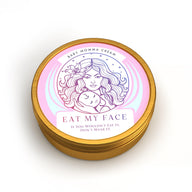
Our fragrance-free tallow cream is built that way: a tallow cream with no water in the formula, nine ingredients, and a label line that reads "Fragrance: none added; no essential oils." It comes in a 4 oz metal tin, not a pump bottle, because there's no water to make it pump. For a side-by-side of how that compares with a bottle, see tallow vs. lotion, and for the plain definitions, moisturizer vs lotion.
Does unscented tallow moisturizer smell like beef?
Not the way people fear. Well-rendered tallow has little to no scent, and ours is rendered gently and never bleached or deodorized, so you get a faint, clean fat note straight from the tin that fades as it absorbs. What people tell us after the first week is that they stopped noticing it on day two. A fragrance-free cream that still smells faintly of its own fats is the honest kind. One that smells of absolutely nothing is either heavily refined or quietly masked.
How to use an unscented cream like a body lotion
The one thing people miss when they switch from a bottle: a cream needs a few seconds of warmth to spread. Do that and it goes on as easily as lotion, with far less product.
Timing does the rest. The AAD says to apply moisturizer "when your skin is still damp after taking a shower or bath, after washing your hands, and when your skin feels dry." The fats seal in the water already sitting on your skin. The formulation review puts a sensible frequency at one to three times a day, especially after a bath.

Hands are where an unscented cream earns its keep, because you wash them all day and every wash strips them a little. Keep a tin by the sink and use a dab after drying. Our guide to tallow balm for dry, cracked hands goes knuckle by knuckle. Pair it with a bar that's fragrance-free too, so the soap isn't undoing the cream: our fragrance-free soap guide shows what to look for on a bar.
Can I use unscented beef tallow on my face?
Yes. A short-label tallow cream is gentle enough for cheeks and the dry patches around the nose and mouth. Use less than you would on your legs, about a pea-sized amount, warm it between your fingertips and press it in. In the morning, put it on before sunscreen and give it a couple of minutes; our sunscreen or lotion first guide explains the order.
Want the longer story on tallow as a lotion swap? Beef tallow lotion: the balm dry skin wants covers it.
The fragrance-free cream we'd hand you instead of a lotion
The Baby & Momma Cream is the fragrance-free one, built on grass-fed beef tallow, shea butter, cocoa butter, arrowroot powder, sea buckthorn oil, vitamin E, jojoba oil, fractionated coconut oil and cetyl alcohol.
For the sink beside it, the Unscented Beef Tallow Soap Bar has six ingredients (grass-fed beef tallow, water, sodium hydroxide, coconut oil, cocoa butter and shea butter) and the same "none added; no essential oils" line. It's $13.99 a bar, or grab the twin pack for $22.98.
Quick answers
Is unscented lotion the same as fragrance-free lotion?
No. Unscented describes how the lotion smells, while fragrance-free describes what went into it. The AAD notes that an unscented product can contain chemicals that neutralize or hide other odors. Look for the words fragrance-free on the label.
How can you tell if a lotion is fragrance free?
Check the ingredient list, not the front label. A fragrance-free lotion has no fragrance, parfum, aroma or scented essential oils anywhere in the list. Start with the last few lines, where under-1-percent ingredients can sit in any order.
Why does my unscented lotion still smell?
Either its base ingredients carry their own faint smell, which is normal, or a masking scent was added and is fading. Real fats like tallow, shea and cocoa butter all have a soft natural note. If the list says fragrance, the smell you're getting is the cover-up.
What is the best unscented lotion for dry skin?
A fragrance-free cream or balm rather than a watery lotion, since the AAD says creams and ointments add more moisture. Look for a short ingredient list built on skin-friendly fats such as beef tallow and shea butter. Apply it while your skin is still damp.
Does unscented tallow cream smell like beef?
Well-rendered tallow has little to no scent. Ours is rendered gently and never bleached or deodorized, so it has a faint, clean fat note that fades as it absorbs. Most people stop noticing it within a day or two.
How do I use a tallow cream instead of body lotion?
Warm a small amount between your palms for a few seconds until it softens, then press it into damp skin after a shower or handwashing. It spreads like lotion once warm, and you need less of it. One to three times a day covers most dry spots.
Sources
- American Academy of Dermatology. Dermatologists' top tips for relieving dry skin.
- American Academy of Dermatology. How to test skin care products.
- Sethi A, Kaur T, Malhotra SK, Gambhir ML. Moisturizers: The Slippery Road. Indian J Dermatol. 2016;61(3):279–287.
- Russell MF, Sandhu M, Vail M, Haran C, Batool U, Leo J. Tallow, Rendered Animal Fat, and Its Biocompatibility With Skin: A Scoping Review. Cureus. 2024.
Ready to try it? Beef Tallow Baby & Momma Cream - Gentle Daily Moisture is in stock and ships fast — $24.99. 180 days to decide.

