

Hypoallergenic Soap: The Label Word With No Legal Meaning (and the 6-Ingredient Bar to Buy Instead)
Hypoallergenic soap is whatever soap a brand decides to call hypoallergenic. The word has had no legal definition in the US since a federal appeals court struck down the FDA's attempt to define it in 1977. The version worth buying is a soap whose label you can check against your own skin in five seconds: a short ingredient list, no added fragrance, no essential oils, and every oil named. That is the bar to look for, and it is exactly how our six-ingredient Unscented Tallow Soap is built.
So the word on the front of the box tells you very little. The list on the back tells you nearly everything. Here's how to read it, why fragrance is the first thing to cut, and why grass-fed tallow makes such a good base for a bar you actually want near your face.
What "hypoallergenic soap" actually means (blame 1977)
The FDA did try. In February 1974 it started writing a rule, Regulation 700.100, that would have let a cosmetic say "hypoallergenic" only if it caused "fewer adverse reactions than other, similar-type use products." The proof was going to be comparison testing against reference products adding up to a 10% market share.
Two cosmetics companies, Almay and Clinique, sued in July 1975. On December 21, 1977, the US Court of Appeals for the D.C. Circuit sided with them and reversed. The court's reasoning is the fun part. The FDA leaned on a consumer survey, but when people were asked in their own words what "hypoallergenic" meant, only about 4% described it as "fewer reactions than other products." And the American Medical Association committee the FDA quoted had said the term "has outlived its usefulness, is misleading, and should be dropped from the labeling of cosmetic products."
Nothing replaced the rule. The FDA's own consumer guidance still says there are no federal standards for the word, and that it means whatever a particular company wants it to mean. No test is required before it goes on a soap box, and nobody checks it after.

That doesn't make every hypoallergenic soap a bad soap. It just means the adjective isn't doing the work. The ingredient list is.
Why fragrance is the first thing a hypoallergenic soap should drop
If you only cut one thing, cut the scent. A 2024 review in Acta Dermato-Venereologica by Sukakul, Bruze and Svedman calls fragrances "amongst the most commonly reported contact allergens." In the European general population, fragrance contact allergy ran at 4.5% between 2008 and 2011. Among people being patch-tested at skin clinics, the rate for the standard fragrance mix reached about 20%.
And "natural" scent doesn't get a free pass. The same review reports ylang-ylang oil with the highest contact-allergy rate among the essential oils, up to about 2.5% of people tested. A lavender or eucalyptus bar can smell lovely and still be the thing your skin argues with.

Here's the label problem. US cosmetic rules (21 CFR 701.3) let a brand list fragrance as one word: "fragrance." Whatever blend sits behind it stays private. The EU has, for years, made labels name individual fragrance allergens once they pass set limits. So a US bar can print "hypoallergenic" on the front and "fragrance" on the back, and you have no way to know what's in it.
"Unscented" isn't the fix either. The American Academy of Dermatology tells people who react to fragrance to choose products labeled "fragrance free" and to stay cautious with ones labeled "unscented" or full of botanicals, because those "may still have fragrance-related ingredients." We dug into that gap in how to spot a fragrance free soap that actually is.
The hypoallergenic bar soap checklist: what the label should show
You don't need a chemistry degree. You need the back of the box and about five seconds.
A list you can read out loud. Six ingredients is easy to check against what you already know about your skin. Thirty is a scavenger hunt.
No "fragrance," "parfum" or essential oils. If you're buying a soap for sensitive skin, the scent is optional and the risk isn't.
Every oil named. "Plant oils" or "vegetable oils" hides the one thing you might need to see. If you know shea or coconut bothers you, a named list lets you skip that bar in a second. A vague one doesn't.
Nothing added for looks. A plain bar is cream or ivory. It doesn't need to be mint green to clean your face.
One thing no label shows is how a bar feels after you rinse. If your current soap leaves skin tight, the pH side of that story is in why soap dries out your skin, and the full buying guide is soap for sensitive skin: how to pick a gentle bar.

Why tallow makes a great base for a hypoallergenic face soap
Tallow is rendered beef fat, and it has been turned into soap for centuries. The reason it's having a moment again is the match. A 2024 scoping review in Cureus (Russell and colleagues) describes tallow as mostly oleic, palmitic and stearic acids, the same fatty acids that turn up in your skin's own outer layer. Your skin already knows what to do with these.
In a bar, that fat becomes a creamy, dense lather that rinses clean without leaving skin squeaky. Properly rendered grass-fed tallow has little to no smell of its own, and ours is never bleached and never deodorized, so there's nothing to cover up. That matters more than it sounds, because plenty of "unscented" soaps still carry masking agents to cover the smell of their base. Ours has nothing to mask. More on the science in why tallow soap mimics sebum.
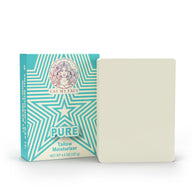
Here's the full ingredient list on our Unscented Tallow Soap, straight off the product page: grass-fed beef tallow, water, sodium hydroxide (lye), coconut oil, cocoa butter, shea butter. That's it. Fragrance: none added. Essential oils: none. It's a 4.5 oz bar made in small batches in Eugene, Oregon, and it works on face, body and hair.
We'd rather show you six ingredients than hand you one adjective. If you want to compare the scented bars too, our four tallow soaps, ranked by who uses them lays them side by side. And if the shea in the list caught your eye, here's how tallow and shea butter compare on their own.
How to use a hypoallergenic tallow soap on face and body
Tallow soap is easy, but a few habits get more out of a bar and keep it gentle.
Lather in your hands, not on your face. Wet the bar, work it between your palms for a few seconds, then wash with the lather. Dragging a bar across your cheeks is more friction than your face needs.
Lukewarm water, short wash. Thirty seconds on your face is plenty. Hot water and long scrubbing do more to leave skin tight than most soaps do.
Moisturize while skin is still a little damp. A tallow bar rinses clean without that squeaky feeling, and a cream on top locks the water in. Our tallow balm vs tallow soap guide covers how the two work as a pair.
Let it dry between uses. Keep the bar on a draining soap dish, out of the shower stream. A bar that sits in a puddle goes soft and disappears fast; a dry one stays firm and creamy.
The same bar does your body and your hair, so it can be the only soap in the shower. One fewer label to check.
How to test a hypoallergenic soap before it goes everywhere
Even the shortest label can't know your skin. A home test can. The AAD's steps, adapted for a bar you rinse off:
Pick a quarter-sized spot where it won't get washed by accident, like the underside of your arm or the bend of your elbow. Lather the soap there and leave it on for about five minutes, which is what the AAD suggests for anything you'd normally rinse off. Do it twice a day for seven to 10 days. No red, itchy or swollen skin by the end? Go ahead and use it the normal way.
Five minutes is far longer than a soap sits on your face in real life, so a clean result here is a good sign. If your question is about the tallow itself, we answered can you be allergic to beef tallow in a separate post.
Quick answers
What does hypoallergenic mean on a soap label?
Legally, nothing specific. The FDA tried to define it in the 1970s, and a federal appeals court struck the rule down in 1977. Today a brand can print "hypoallergenic" without running any test, so read the ingredient list instead of the front of the box.
Is unscented soap the same as hypoallergenic soap?
No, and neither is the same as fragrance free. "Unscented" can mean a masking scent was added to cover the base smell. Look for a bar that lists no fragrance, no parfum and no essential oils at all.
What should a hypoallergenic soap not contain?
Start with fragrance and essential oils. Fragrances are among the most commonly reported contact allergens, and US labels can hide a whole blend behind that one word. After that, avoid vague terms like "plant oils" so you can see every oil in the bar.
Is tallow soap good for sensitive skin?
It's one of the simplest bars you can buy. Tallow is rich in oleic, palmitic and stearic acids, the same fatty acids found in skin's outer layer, and properly rendered tallow barely smells, so it doesn't need fragrance. Our Unscented bar has six ingredients and no added scent.
How do I patch test a new soap?
Lather a quarter-sized spot on the inside of your arm or the bend of your elbow and leave it for about five minutes before rinsing. Repeat twice a day for seven to 10 days. If there's no redness, itching or swelling, use it as normal.
Can I use a hypoallergenic soap on my face and body?
Yes, if it's a gentle bar with a short list. Our Unscented Tallow Soap is made for face, body and hair. Lather with water, rinse, and follow with a moisturizer if your skin likes one.
The bar we'd hand a friend who reacts to everything
Our Unscented Tallow Soap is six ingredients: grass-fed beef tallow, water, lye, coconut oil, cocoa butter and shea butter. No added fragrance, no essential oils, nothing to hide behind one word. Go through bars fast? The Unscented Twin Pack is two of them.
Want a cream to follow it? The Baby & Momma Cream is the fragrance-free one, built on grass-fed beef tallow, shea butter, cocoa butter, arrowroot powder, sea buckthorn oil, vitamin E, jojoba oil, fractionated coconut oil and cetyl alcohol.
Sources
- Almay, Inc. v. Califano, 569 F.2d 674 (D.C. Cir. 1977). law.resource.org
- Sukakul T, Bruze M, Svedman C. Fragrance Contact Allergy: A Review Focusing on Patch Testing. Acta Derm Venereol. 2024;104:40332. PMC11334351
- 21 CFR § 701.3, Designation of ingredients. Cornell Legal Information Institute
- American Academy of Dermatology. How to test skin care products. aad.org
Ready to try it? Unscented Beef Tallow Soap Bar - Fragrance-Free is in stock and ships fast — $13.99. 180 days to decide.


