

Mango Butter vs Shea Butter: The Difference Isn't the Fat
Mango butter and shea butter are nearly the same fat. Both run about 45% oleic acid, both are loaded with stearic acid, and both go liquid within a couple of degrees of skin temperature. The difference worth paying for is the part that isn't fat at all: crude shea butter carries roughly 5% unsaponifiable matter — the sterols, triterpene alcohols and tocopherols behind its grip, its faint smoky smell and most of its antioxidant load — while mango kernel fat carries under 2%. So shea is the richer, draggier, busier butter, and mango butter is the clean, near-odorless one that melts out and vanishes. Want a light finish under makeup or in a hot room, reach for mango. Want something that parks itself on tight, flaky skin overnight, reach for unrefined shea.
That is the whole answer. The rest of this is the part the comparison charts skip: why two fats with almost identical lab printouts behave so differently on a face, and what the word "refined" quietly does to one of them.
Mango butter vs shea butter: the fatty acids are close to a tie
Put both through a lab and the results nearly overlap. A 2023 analysis in Foods measured crude shea butter at 45.77% oleic acid, 43.53% stearic, 5.85% linoleic and just 3.17% palmitic. A 2016 review of mango kernel oil in the Journal of Food Science and Technology reports roughly 45% oleic, about 37.5% stearic, 5.48% linoleic and 7.43% palmitic. Two different plants, two different continents, one nearly identical shape: oleic and stearic acid doing almost all the work, everything else a rounding error.
Melting points track each other too. Crude shea butter measured 32 °C in that study. Mango kernel fat is reported at 32–36 °C with a solid fat index of zero at body temperature, which is a technical way of saying it turns completely liquid the moment it touches you.

What is mango butter, exactly?
It gets pressed from the kernel inside the flat seed at the center of a mango, the bit everyone throws away. That kernel is roughly 10–15% oil by weight, and unlike most commercial vegetable oils it is usable with little or no processing, because it comes out low in free fatty acids and low in peroxides. Its dominant triglyceride, SOS, makes up somewhere between 29% and 40% of the fat, which is why the confectionery industry buys mango kernel fat as a cocoa butter equivalent. Same reason it feels the way it does in the jar: firm, snappy, not greasy.
One piece of botany that alarms people and shouldn't: mango sits in the same plant family as cashew and poison ivy. The urushiol that family is famous for lives in the peel and the sap, not in the pressed kernel fat.
What is shea butter made from?
The nut of the karité tree, Vitellaria paradoxa, grown across the West African savannah belt. Traditionally the nuts are crushed, roasted and kneaded, and that roasting is a large part of why unrefined shea smells the way it does. Industrial shea then goes through de-gumming, neutralization, bleaching and deodorization to become "refined" — the single most underrated variable in this entire comparison.
The real difference is the 5% that isn't fat
Every plant fat carries a small non-triglyceride fraction called unsaponifiable matter: sterols, fatty alcohols, tocopherols, triterpene alcohols and squalene. It is the share that does not turn into soap when you saponify the fat, and in shea butter it is unusually large. That 2023 Foods analysis measured 5.06% in crude shea butter, with Codex Alimentarius allowing anywhere from 1% to 19% and other groups reporting over 7%. Mango kernel fat was characterized at 1.77% in one varietal analysis and 1.68% in a comparative table. Roughly a third of shea's.
What sits in shea's share is the interesting bit: 13.09 mg/g of α-amyrin and 7.32 mg/g of β-amyrin, both triterpene alcohols, plus about 10 mg per 100 g of tocopherols, most of that α-tocopherol. Those compounds are why unrefined shea smells faintly smoky, why it feels tacky rather than slick, and why it carries antioxidant activity that a plain triglyceride does not.

Why does refined shea butter feel so different?
Because refining takes that fraction out. In the same 2023 study, refining and fractionating crude shea butter into shea stearin dropped its unsaponifiable matter from 5.1% to 0.2%. Flavonoid content fell by more than a third. Radical-scavenging activity went from 28.33% down to 6.79%. The olein fraction kept its minor components at 6.4%, but the hard, white, odorless stearin most people picture when they hear "refined shea butter" is chemically not far off a plain hard triglyceride.
Which means half the arguments about these two butters are comparing the wrong things. Someone who says they hate shea usually met raw, smoky, grainy shea. Someone who loves mango butter usually likes that it does nothing except melt. Ultra-refined shea stearin sits closer to mango butter than it does to the shea it came from, so "which butter" is the second question. The first is which version of it you're holding.
How each one actually feels on skin
Mango butter goes from waxy to liquid fast and leaves a thinner film. Shea butter, unrefined especially, drags longer and stays where you put it, and that tackiness is the amyrins rather than a defect. Shea also grains more readily, because its stearin and olein fractions melt 11 °C apart (36 °C versus 25 °C) and re-crystallize separately if a jar warms up and then cools slowly. If you have ever opened a butter that went from silky to sandy, that is the mechanism, and it is the same one behind grainy tallow.
Scent is the other honest split. Unrefined shea has a nutty, faintly smoky smell that some people love and some cannot get past. Mango butter is close to odorless and, sorry, it does not smell like mango. The fruit's aroma compounds live in the flesh, not the kernel fat. Formulators reach for mango butter constantly for exactly that reason: it adds body without adding a smell they then have to cover up.
Which one is better for the face?
For a light daytime finish, mango butter. For a heavy overnight layer on skin that feels tight and flaky, unrefined shea. If you are weighing either against a bottle of lotion, the water content changes the arithmetic completely, which we worked through in moisturizer vs lotion.
Does mango butter clog pores less than shea butter?
Both land low on the comedogenic scale, but those ratings trace back to mid-century rabbit-ear testing rather than human faces, and they rate raw ingredients instead of finished formulas. We walked through where shea's 0–2 number comes from and the caveat that actually matters in is shea butter comedogenic, and ran the same exercise on tallow. If you are breakout-prone, how much you use and what else is in the jar will matter more than either rating.
What neither butter has: wax esters and squalene
Here is what the mango-versus-shea framing hides. Both are plant fats, and plant fats run 98–99.5% triglyceride. What your skin secretes does not. Human sebum is roughly 57.5% triglycerides and free fatty acids, 26% wax esters, 12% squalene, and 4.5% cholesterol and cholesterol esters. Close to four molecules in every ten on your face belong to categories a plant butter simply does not contain. Shea's measured squalene works out to about 0.02% by weight.
Grass-fed beef tallow is the outlier, because it is an animal fat built the way yours is. A 2024 scoping review in Cureus on tallow's biocompatibility with skin puts oleic acid first in its profile, then palmitic, then stearic, and describes tallow's hydrating and moisturizing behavior on skin. Same rank order, same family of lipids your sebaceous glands already make. That is why tallow sinks in instead of sitting on top waiting to be rubbed around, and why we build on it rather than on a butter. The long version is in tallow vs shea butter, and we ran the same comparison against coconut oil.
None of which makes shea a lesser ingredient. We use it. Shea butter and cocoa butter are both on the label of our Original, high on the list, sitting right behind the tallow, because they bring body and slip that tallow on its own does not. They are simply not the foundation.
How to pick between them at the shelf
Buy for the finish you want and check which version you are getting, because the label word that changes the most is "refined", not the plant name. Unrefined shea for maximum richness and grip. Mango butter, or refined shea stearin, for a light odorless finish that disappears. And if what you want is something shaped like the lipids your face already produces, a butter is the wrong aisle.

Want the butter and the sebum-shaped fat in the same tin?
Our Original Beef Tallow Moisturizer leads with grass-fed tallow and carries shea butter and cocoa butter right behind it: eleven edible-grade ingredients, no water in the formula, 4 oz metal tin. It is the one we reach for on tight winter skin.
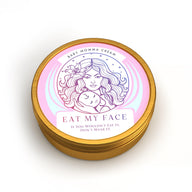
The Baby & Momma Cream is the fragrance-free one, built on grass-fed beef tallow, shea butter, cocoa butter, arrowroot powder, sea buckthorn oil, vitamin E, jojoba oil, fractionated coconut oil and cetyl alcohol.
Quick answers
Is mango butter better than shea butter?
Not across the board. Their fatty acids are nearly identical, so neither wins on composition. Shea carries about three times the unsaponifiable matter, which makes it richer and more antioxidant-dense; mango butter is lighter, odorless and melts out faster.
Which is better for dry skin?
Unrefined shea butter, if the goal is maximum occlusion and staying power. Its higher unsaponifiable fraction gives it more grip, and it holds a film longer than mango butter does. Apply it to skin that is still damp so there is water underneath to hold in.
Can I swap mango butter for shea butter in a recipe?
Usually yes, one for one by weight. The melting points and fatty-acid profiles are close enough that the texture lands in the same neighborhood. Expect the mango version to come out slightly firmer in the jar, softer on the skin, and essentially unscented.
Does mango butter smell like mango?
No. The aroma compounds belong to the fruit's flesh, not the seed kernel that the fat is pressed from. Good mango butter smells like almost nothing at all, which is exactly why formulators like it.
Is shea butter a nut product?
Yes. It is pressed from the nut of the karité tree, Vitellaria paradoxa. If you avoid nut-derived ingredients, mango kernel fat is the closer substitute of the two in both texture and fatty-acid profile.
What about cocoa butter?
Cocoa butter is the hardest of the three and the only one with a scent most people actually want. It is also the benchmark the other two chase, since both mango kernel fat and shea stearin are sold as cocoa butter equivalents. In a formula it contributes structure more than slip.
Sources
- Effect of Refining and Fractionation Processes on Minor Components, Fatty Acids, Antioxidant and Antimicrobial Activities of Shea Butter — Foods, 2023 (crude shea butter fatty acids, 5.06% unsaponifiable matter, amyrins and tocopherols, melting points, refining losses).
- Promising features of mango (Mangifera indica L.) kernel oil: a review — Journal of Food Science and Technology, 2016 (mango kernel fat composition, 1.77% unsaponifiable matter, 32–36 °C melting point, SOS triglyceride share).
- Sebaceous gland lipids — 2009 (human sebum composition: triglycerides and free fatty acids, wax esters, squalene, cholesterol).
- Tallow, Rendered Animal Fat, and Its Biocompatibility With Skin: A Scoping Review — Cureus, 2024 (tallow fatty-acid rank order and its hydrating, moisturizing behaviour on skin).
Ready to try it? Beef Tallow Baby & Momma Cream - Gentle Daily Moisture is in stock and ships fast — $24.99. 180 days to decide.


