

Beef Tallow vs Coconut Oil: Which Actually Works Better on Skin?
Short answer: Coconut oil is plant-based with a high lauric-acid content, making it antimicrobial but highly comedogenic — it clogs pores and triggers breakouts, especially on the face. Grass-fed beef tallow's fatty acid profile matches human skin lipids, so it absorbs without clogging. For most skin, especially acne-prone, sensitive, or eczema-prone, tallow is the better choice. Here's the full scientific and practical comparison.
What is coconut oil, and why did it become popular in skincare?
Coconut oil is expressed from coconut meat. It's 90% saturated fat, dominated by medium-chain triglycerides — lauric acid (~47%), myristic acid (~18%), and caprylic/capric acids. It rose in popularity in the 2010s as an "all-in-one" natural oil that could replace moisturizer, hair mask, oil pulling, and cooking — often all at once.
For the full science of deep dive on beef tallow for face, we wrote a complete guide covering why face skin behaves differently than body skin and how to use tallow on it AM/PM.
For the full primer on using grass-fed tallow on the face, see our tallow face guide — it covers benefits, AM/PM routines, what to avoid, and our top picks by skin type.
For the side-by-side, we wrote coconut oil's heat-retention problem on sunburn — why a heat-trapping occlusive is the wrong move on inflamed skin and what to reach for instead.
Short version: it's a decent cooking oil and hair mask. As a face moisturizer, the science has not been kind to it.
What is beef tallow in skincare?
Beef tallow is rendered fat from cattle — ideally grass-fed. Its fatty acid profile is 40-50% monounsaturated (oleic, palmitoleic acids), 45-55% saturated (palmitic, stearic), and small amounts of polyunsaturated fats. That breakdown almost exactly matches the lipids human skin produces naturally. Biological match, not coincidence.
Our Original Beef Tallow Moisturizer is grass-fed tallow with shea butter, cocoa butter, jojoba oil and vitamin E. Eleven ingredients, all edible-grade. (Full disclosure, given the topic: a little coconut oil is one of the eleven, eighth on the label.)
Is beef tallow or coconut oil better for skin?
For most skin types and most skin areas, beef tallow is better because it's biocompatible (matches skin lipids), low comedogenic, and delivers fat-soluble vitamins A, D, E, and K naturally. Coconut oil can still be useful for hair, scalp, body (arms and legs — less acne-prone areas), and antimicrobial spot treatment, but not on the face for most people.
Is coconut oil comedogenic? (Yes.)
Yes. Coconut oil has a comedogenic rating of 4 out of 5 — meaning it's highly likely to clog pores. This is directly caused by the high lauric-acid content, which is excellent at killing bacteria but forms a thick occlusive layer your pores can't push through.
For acne-prone, oily, or combination skin, coconut oil on the face is almost guaranteed to cause breakouts within a week or two. Beef tallow, by contrast, rates around 1-2 out of 5 — among the lowest of natural oils.
Beef tallow vs coconut oil: full comparison
| Factor | Grass-fed Beef Tallow | Coconut Oil |
|---|---|---|
| Source | Rendered grass-fed cattle fat | Cold-pressed coconut meat |
| Comedogenic rating | 1-2 / 5 (low) | 4 / 5 (high) |
| Biocompatibility | Fatty acid profile matches human skin | Plant-based, doesn't match skin lipids |
| Fat-soluble vitamins | Naturally rich in A, D, E, K | Trace E, no A/D/K |
| Primary fatty acid | Oleic + palmitic (skin-identical) | Lauric (antimicrobial, pore-clogging) |
| Best for face | Yes — all skin types | No — high breakout risk |
| Best for hair | Fine | Excellent conditioning |
| Best for body | Yes | OK (avoid acne-prone areas like chest/back) |
| For babies | Yes — very gentle | Can cause baby acne / irritation |
| Vegan? | No | Yes |
| Shelf life | 12-18 months (stable) | 12 months (can oxidize) |
Can I use coconut oil on my face at all?
For most people, no — not as a leave-on moisturizer. Even people with dry, non-acne-prone skin often develop clogged pores after several weeks of daily facial use. Coconut oil as a short-contact oil cleanser (applied, massaged, then fully removed with a warm cloth) is less problematic. As a moisturizer you leave on overnight? Skip it.
If short-contact cleansing is the use you're after, we wrote a full guide to the oil cleansing method for face — which oils work, the exact steps, and who should skip it.
Why does coconut oil cause breakouts?
Coconut oil's lauric acid is a saturated fatty acid with a molecular structure that packs tightly into pore openings. When combined with skin's natural sebum and dead cells, it forms a comedo (whitehead or blackhead). Because lauric acid is also antimicrobial, it kills the bacteria that normally balance the pore environment — which further disrupts skin chemistry.
Grass-fed tallow's dominant fatty acids (oleic and palmitic) are the same ones your skin produces to keep pores clear. That's why tallow doesn't cause the same problem.
Is coconut oil better for any specific use?
Yes — a few:
- Hair masks — coconut oil is one of the few oils that actually penetrates the hair shaft. 20-30 min before washing is effective.
- Scalp massages — antimicrobial properties can help with mild dandruff
- Feet and cuticles — heavier, less-sensitive skin tolerates it well
- Short-contact oil cleansing — remove fully with warm cloth, do not leave on
- Cooking — medium-chain triglycerides metabolize differently than long-chain fats
For face and body daily moisturizing? Go with tallow.
Does tallow have the same antimicrobial properties as coconut oil?
Grass-fed tallow contains small amounts of conjugated linoleic acid (CLA), which has mild antimicrobial effects, but not at the same level as coconut oil's lauric acid. However, this isn't a downside for most skin — you generally want to support, not disrupt, the skin microbiome. Lauric acid's aggressive antimicrobial action is often why coconut oil destabilizes the microbiome in ways that trigger breakouts.
Which is better for babies — tallow or coconut oil?
Tallow, clearly. Coconut oil is often used as a "natural" option for baby massage and diaper rash, but its high comedogenicity can cause baby acne and clogged pores in the milia-prone newborn period. Grass-fed tallow's skin-lipid-matching profile is gentler and less likely to cause those issues.
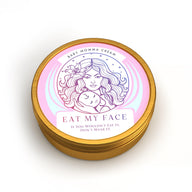
Our Baby & Momma Cream was formulated exactly for this reason — a clean, biocompatible alternative to both coconut oil and petroleum-based baby products.
Is beef tallow antifungal? (Coconut oil is mildly so.)
Coconut oil's lauric and caprylic acids have documented antifungal activity. Tallow doesn't share this property. If you're using an oil specifically to address mild fungal skin issues (not as a replacement for medical treatment), coconut oil is the better topical option — just keep it off your face and acne-prone areas.
FAQ: Beef tallow vs coconut oil
Which is better for dry skin — tallow or coconut oil?
For facial dryness, beef tallow. It absorbs deeper without clogging pores. For body dryness on arms and legs, both can work — coconut oil is cheaper. For truly compromised barriers (eczema, very dry skin), tallow's lipid-matching profile beats coconut oil every time.
Can coconut oil heal a skin barrier like tallow can?
Not as effectively. A compromised skin barrier needs the specific lipids it's missing — palmitic, stearic, oleic, and cholesterol. Tallow provides all of them in roughly skin-matching ratios. Coconut oil provides lauric and myristic acids, which skin doesn't normally contain in significant amounts, so it coats without integrating.
Does coconut oil cause breakouts on the face?
Yes, for most people. Coconut oil has a comedogenic rating of 4/5 and is one of the most reliable triggers for congestion, whiteheads, and inflamed breakouts when used on facial skin over time.
Can I use coconut oil as a body moisturizer if I like the smell?
Yes, on arms, legs, and low-acne body areas. Avoid chest, back, and anywhere you're prone to congestion. Don't use it on your face.
Is beef tallow or coconut oil better for eczema-prone skin?
Beef tallow, clearly. Coconut oil's lauric acid can sting already-irritated skin and its pore-clogging tendency adds risk, while tallow's fatty-acid profile closely matches the lipids a compromised barrier is missing — it moisturizes and supports the skin barrier without the sting. Patch-testing, routines, and what parents tell us are covered in our full guide to beef tallow for eczema.
Is grass-fed tallow really that different from regular tallow?
Yes. Grass-fed tallow has a significantly higher concentration of fat-soluble vitamins (A, D, E, K), a better omega-6 to omega-3 ratio, and more conjugated linoleic acid (CLA). For skincare, that nutrient density directly affects skin health.
Does tallow go rancid like coconut oil?
Both have similar shelf lives (~12 months unopened, 6-9 months opened). Properly rendered tallow is actually more shelf-stable than unrefined coconut oil because its saturated fats resist oxidation. Store both away from heat and light.
Can I mix tallow and coconut oil?
You can, but for facial use it defeats the purpose — coconut oil's comedogenicity doesn't cancel out just because you've mixed it with something gentler. On hair or body, a blend can be fine.
Is tallow greasier than coconut oil?
Quite the opposite — grass-fed tallow absorbs in 60-90 seconds. Coconut oil can sit on top of skin for much longer, especially in cool temperatures. Tallow behaves like your skin's own sebum: integrates, doesn't sit.
Why do so many natural skincare blogs recommend coconut oil?
Historical inertia. Coconut oil was the natural-oil darling of the 2010s, before the comedogenicity research was well-understood outside dermatology circles. Many wellness bloggers have not updated their recommendations. The pore-clogging science is well-documented now — tallow has largely replaced coconut oil in people who moved past the early natural-skincare wave.
Is tallow vegan?
No. Tallow is an animal product. If a strict vegan requirement is non-negotiable, neither tallow nor lanolin are options — but coconut oil isn't the right replacement either for facial use. Consider unrefined shea butter or jojoba oil, which have better facial compatibility than coconut.
Want the biocompatible option instead? Try the Original Beef Tallow Moisturizer, or compare face + cleansing in our Sensitive Skin Starter Pack.
More reading: Tallow vs Shea Butter: The Honest Comparison.
Related Reading
- Beef Tallow vs CeraVe: The Honest Comparison
- Natural Baby Skincare With Tallow
- Beef Tallow Sunscreen + After Sun Care Routine
- is coconut oil good for sunburn
Related: is coconut oil good for sunburn?
Reaching for coconut oil on a fresh burn is one of the most common sunburn mistakes. Oils seal, but they can't cool the skin or add water — which is exactly what a new burn needs. Timing changes the whole answer.
- Is coconut oil good for sunburn? — why not on a fresh burn, what to use in the first 48 hours, and when oil finally helps
Ready to try it? Beef Tallow Baby & Momma Cream - Gentle Daily Moisture is in stock and ships fast — $24.99. 180 days to decide.


