

Is Shea Butter Comedogenic? The 0-2 Rating and Its One Big Caveat
Is shea butter comedogenic? On the standard 0 to 5 scale, shea butter is rated 0 to 2, which puts it at the low-clog end for most skin. That number comes from decades-old tests that rubbed raw ingredients on rabbit ears, so read it as a signpost rather than a promise. Shea is roughly 46% oleic acid, a fatty acid that oily and breakout-prone faces sometimes react to, and it is thick enough to sit on top of skin instead of sinking in. Dry and normal skin: use it freely. Oily or breakout-prone skin: patch test a small spot for a week before committing your whole face to it.
Shea butter has a reputation problem, and it is mostly undeserved. Search any skincare forum and you will find one person swearing it cleared their skin and the next person swearing it wrecked it. Both are probably telling the truth. The answer to "does shea butter clog pores" depends on whose pores, how much shea, and what else is in the jar with it. Let's go through all three.
Is shea butter comedogenic? What the rating actually means
"Comedogenic" is a fancy way of saying "likely to plug a pore." A comedo is the blocked follicle that eventually becomes a whitehead or blackhead. In the late 1970s and 1980s researchers built a scoring system for cosmetic ingredients by applying them to the inside of rabbit ears, which sprout comedones far faster than human skin does, then counting the plugs. Zero meant nothing happened. Five meant the ear looked like a teenager's forehead.
Shea butter usually lands at 0 to 2 on that scale. Coconut oil, for contrast, is often cited around 4, and grass-fed beef tallow sits around 2. We wrote up the tallow number in detail in our post on whether beef tallow is non-comedogenic, and the short version applies here too: a low rating means "low likelihood of clogging for most people," not "guaranteed safe for your face."
Here is the part the rating charts leave out. Those rabbit-ear tests used ingredients at 100% concentration. A 2021 clinical trial on comedogenicity put it plainly: the comedogenic potential of a raw ingredient "cannot be taken to be the same as finished products," because mixing ingredients and applying them to human skin changes the outcome. Raw shea slathered on straight from the tub is a different animal from a cream that is 15% shea blended with lighter oils.
Is shea butter non-comedogenic, then?
Not officially. "Non-comedogenic" on a label is a marketing term with no legal definition, and the American Academy of Dermatology suggests looking for it mainly as a filter on sunscreens and moisturizers if you break out easily. Shea butter is low on the scale. It is not zero. If you want a true zero, you are looking at things like squalane or jojoba, and even those have exceptions.
Why shea butter clogs some pores and not others
The reason two people can have opposite experiences with the same jar comes down to the fat itself. Shea butter is about half stearic acid and half oleic acid, with only a sliver of linoleic acid. A 2023 analysis of crude shea butter measured it at roughly 43.5% stearic, 45.8% oleic, 5.9% linoleic and 3.2% palmitic acid.

Two things follow from that profile. First, stearic acid is a saturated, waxy fat with a high melting point, which is why shea is solid at room temperature and why it feels heavy on a face. Heavy is great on cracked heels in January. Heavy on an oily T-zone in July is a different story, because the film it leaves can trap the sebum your skin is already producing.
Second, the oleic acid. A 2017 review in the International Journal of Molecular Sciences found that oleic acid, applied on its own continuously, can disrupt the skin barrier, while linoleic acid helps maintain it. Some people who break out easily also have skin that is naturally low in linoleic acid, so piling on an oleic-heavy butter tilts the balance further. That is the likely mechanism behind "shea butter broke me out," and it has nothing to do with the ingredient being dirty or low quality.
Does raw or unrefined shea butter clog pores more than refined?
Not meaningfully. Refining strips some of the unsaponifiable fraction, the triterpenes and sterols that give raw shea its nutty smell and most of its skin-soothing reputation, but the fatty acid profile stays nearly the same. Refined shea is not "lighter" in any way your pores would notice. Pick raw for the extras, refined for the neutral smell, and expect the same clog risk either way.
That unsaponifiable fraction is also exactly what separates shea from its closest cousin — our mango butter vs shea butter breakdown shows how the two compare on it.
Is shea butter good or bad for acne-prone skin?
Honest answer: it is a gamble, and the odds are better than the internet suggests. Shea carries genuinely useful compounds. That same 2017 review notes shea's unsaponifiables have shown anti-inflammatory activity in lab studies, and plenty of breakout-prone people use it happily as a night moisturizer. But if your skin is oily, or you already know oleic-rich oils like olive oil make you bumpy, shea is one of the more likely plant butters to add to the pile. Use it thin, use it at night, and watch what happens over two weeks rather than two days.
Position on the label matters more than the ingredient's name. A body butter that lists shea first is mostly shea, and behaves like it. A face cream that lists it fourth, behind lighter fats and oils, is delivering a fraction of the load, and that 2021 trial's point about finished products cuts in your favor here. So before you write off every product that mentions shea, look at where it sits in the list. "Contains shea butter" and "is shea butter" are very different jars.
How to tell if shea butter is clogging your pores
Comedones are slow. A pore does not plug overnight, which is why "I used shea last night and woke up with a pimple" is almost always a coincidence, and why "I used it for three weeks and my forehead got bumpy" is the pattern worth paying attention to. Give any new fat a real trial and judge it on the closed comedones, those small flesh-colored bumps that never come to a head. Those are the signature of a pore-clogging ingredient. Angry red spots are more often irritation or something else entirely.

The patch test is boring and it works. One spot, one week, then a small zone for another week or two. If nothing changes, your face has voted. If bumps show up in the test zone and nowhere else, you have your answer and you only lost a coin-sized patch of jaw to find it.
Can I use shea butter on my face if I have oily skin?
You can, but you probably do not want to use it straight. Pure shea on oily skin is like wearing a wool coat indoors. It is not going to hurt you, but you will notice it. Oily skin tends to do better with shea as a minority ingredient in a cream, applied at night, kept off the T-zone. If you love how raw shea feels, use it on your body where the skin has fewer sebaceous glands and a heavy occlusive is exactly what you want.

Where we stand, and what it costs us to say so
Our Original moisturizer is about 15% shea butter. It sits third on the ingredient list behind grass-fed beef tallow and cocoa butter, and it is there on purpose, because it gives the cream its glide and its slow-release softness. So if shea butter is your personal trigger, we would rather you know that before you buy than find out after. Read the label. If shea is the problem, the Original is not your jar.
The wider concession is this: tallow shares shea's weak point. Grass-fed beef tallow is also oleic-heavy, roughly 40 to 50% oleic acid, which is one reason it rates around a 2 and not a 0. What tallow has going for it is a fatty acid ratio much closer to human sebum, including a decent slug of palmitic acid, which is why most faces absorb it faster and feel less coated. We laid out that head-to-head in Tallow vs Shea Butter: The Honest Comparison. The gist: for the body, either one. For the face, tallow first, and shea in a supporting role rather than the lead.
And if your skin is reacting to everything you put on it, shea included, that is a pattern worth taking to a dermatologist rather than solving with another jar.
Quick answers
Is shea butter comedogenic?
Shea butter is rated 0 to 2 on the 0 to 5 comedogenic scale, so it is low-clog for most people. The rating comes from old rabbit-ear tests on pure ingredients, so it is a rough guide. Oily or breakout-prone skin should patch test first.
Does shea butter clog pores on your face?
For most people, no. For oily or breakout-prone skin, it can, because shea is thick, about 46% oleic acid, and forms a film that can trap sebum. Using it thinly at night as part of a cream rather than straight from the tub lowers the risk.
Is shea butter good for acne-prone skin?
It is a mixed bag. Shea has soothing unsaponifiables and many breakout-prone people use it without trouble, but its heavy, oleic-rich profile makes it more likely than lighter oils to cause closed comedones on oily skin. Trial it on one spot for a week before using it on your whole face.
What is the comedogenic rating of shea butter compared to coconut oil?
Shea butter is usually rated 0 to 2 while coconut oil is often cited around 4. Grass-fed beef tallow sits near 2. Lower is less likely to clog, but every rating is a population average, not a prediction for your face.
Is raw shea butter more comedogenic than refined?
No. Refining removes some scent and unsaponifiable compounds but leaves the fatty acid profile nearly unchanged, so the clog risk is the same. Choose raw for the extra plant compounds or refined for a neutral smell.
How long does it take to know if shea butter is breaking you out?
Give it two to three weeks. Pores clog slowly, so overnight spots are usually a coincidence. Look for small flesh-colored bumps that build up gradually in the area you applied it. That is the sign of a pore-clogging ingredient.
Want shea in a supporting role instead of the lead?
Our Original Beef Tallow Moisturizer is built on grass-fed beef tallow, with cocoa butter and about 15% shea butter behind it for glide. Eleven edible-grade ingredients, nothing you can't pronounce. If shea is your trigger, our Night Cream leaves it out entirely.
Sources
- Effect of Refining and Fractionation Processes on Minor Components, Fatty Acids, Antioxidant and Antimicrobial Activities of Shea Butter. Foods, 2023 (PMC)
- Anti-Inflammatory and Skin Barrier Repair Effects of Topical Application of Some Plant Oils. International Journal of Molecular Sciences, 2017 (PMC)
- Safety assessment on comedogenicity of dermatological products containing d-alpha tocopheryl acetate in Asian subjects. Contemporary Clinical Trials Communications, 2021 (PMC)
- American Academy of Dermatology: Acne tips for managing
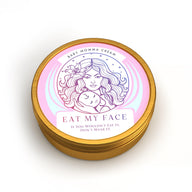
Ready to try it? Beef Tallow Baby & Momma Cream - Gentle Daily Moisture is in stock and ships fast — $24.99. 180 days to decide.


