


Baby Lotion vs Tallow Cream: Why Parents Are Trading the Pump for the Jar
The best baby lotion is fragrance-free, has an ingredient list short enough to read in one breath, and goes on right after the bath while skin is still a little damp. The fragrance-free part and the right-after-the-bath part come straight from the American Academy of Pediatrics. The short list is our own rule. Most baby lotions are mostly water, held together with emulsifiers and kept shelf-stable with preservatives. A water-free tallow cream skips the water entirely and gives baby's thinner, thirstier skin fats that look a lot like the ones skin is built from, so a small dab goes a long way.
That's the whole answer. The rest of this post is the why, the four things to check on any label before it goes in the diaper bag, and exactly how to use it on bath night.
Why baby skin needs a different kind of baby lotion
Baby skin isn't a small version of yours. It's a different build. A 2012 review of the infant skin barrier by Telofski and colleagues pulled the measurements together: on the same patch of body, the outermost layer of skin (the stratum corneum, which is the only layer a moisturizer really works on) measured about 7.3 micrometres in infants against 10.5 in adults. That's roughly 30% thinner.
Thinner also means leakier. The same review reports that infant skin "gained and lost water at significantly faster rates than the same regions on adult skin," and that water loss through the skin runs higher than an adult's. It is also a moving target: skin surface pH starts somewhere between 6.34 and 7.5 at birth and falls to about 5 within the first two weeks, and the barrier keeps developing "through the first year of life."

Put those together and you get skin that dries out fast and soaks up whatever you put on it. Which is exactly why the bottle matters more for them than it ever did for you.
Is baby lotion different from regular lotion?
Usually less than the packaging suggests. Most baby lotions are built the same way adult lotions are: water, a few oils, something to keep the two mixed, something to keep the mix from spoiling. The good ones drop the fragrance. The word "baby" on the front doesn't change the rules on the back, where every ingredient still has to be listed in order.
What's actually in a bottle of baby lotion
Federal labeling law, 21 CFR 701.3, requires cosmetic ingredients to be listed "in descending order of predominance." So the first word on the list is the thing you're buying the most of. On a pump-bottle lotion, that first word is almost always water.
Water and oil don't stay mixed on their own, so a lotion needs emulsifiers to hold it together. And any formula with water in it, opened and closed with damp hands every night, needs a preservative system to keep it from growing things. The European roundtable on infant skin care (Blume-Peytavi and colleagues, 2016) says plainly that baby skin formulations "should be effectively preserved." That's the right standard for a water-based bottle. It's also a reminder of what the water costs you: more ingredients that exist to manage the water, not to moisturize the baby.
Then there's the last line. The same regulation lets a company list its scent as a single word, "fragrance," without naming what's in it. We dug into how that plays out on adult bottles in our unscented lotion label checks; the baby aisle runs on the same rules.
Lotion or cream for a baby?
Cream. The American Academy of Dermatology's dry-skin guidance says it directly: "Ointments and creams add more moisture to skin and are more effective than lotions." Lotion is the thinnest, most watery format on the shelf. For skin that loses water faster than yours, the richer format earns its place. If you want the long version of that split, it's in tallow vs. lotion: what's actually different.
4 label checks for the best baby lotion
You don't need a chemistry degree for this. Flip the bottle over and run these four.
1. "Fragrance-free," not "unscented." The AAP's bath guidance asks for a "fragrance-free, hypoallergenic moisturizing lotion," and the AAD's newborn page asks for a "fragrance-free moisturizer." Both pick the same word on purpose. "Unscented" can mean a masking scent was added to cover the smell of the other ingredients, and essential oils are scent too, however botanical they sound. Our fragrance-free moisturizer guide walks through how to tell them apart.
2. Find the water. If water is the first ingredient, most of what you're paying for evaporates off the skin. That's not a crime. It just means you'll be reaching for the pump again soon, and every ingredient after it is there partly to manage that water.
3. Read the whole list out loud. If you trip over half of it, that's information. A baby lotion doesn't need twenty-five ingredients. The shorter the list, the fewer surprises on skin that's still figuring itself out.
4. Look for the lines your family already skips. Shea butter, coconut oil, nut oils, lanolin, beeswax: if your household avoids any of them, they're easy to miss on a long list and easy to spot on a short one. Ours contains shea butter and fractionated coconut oil, and we print both on the tin.

How to use baby lotion after bath time
Timing does most of the work. The AAP's advice: "Gently pat baby dry and apply a small amount of fragrance-free, hypoallergenic moisturizing lotion right after a bath to help prevent dry skin." Small amount, right after. Skin that's still slightly damp holds on to more of that water when you seal it in.
The bath itself matters too. The AAP says "three baths per week during baby's first year may be enough," and that "bathing more frequently can dry out your baby's skin." The AAD lands in the same place (two to three times a week) and adds a simple fix if skin still looks dry: "apply a fragrance-free moisturizer or consider bathing your baby less." The European roundtable puts newborn baths at 5 to 10 minutes and says emollients "can be used after bathing," with "at least twice-weekly application" worth considering.
Here's how that looks with a tallow cream instead of a pump:

The warming step is what makes a tallow cream feel different from lotion. It's firm in the tin and goes soft and glossy in your palms within a few seconds, because the warmth of your hands is enough to soften it. Press it on rather than scrubbing it in. A little goes a long way, and you'll find the right amount in about two bath nights.
If you're still choosing a soap for the bath itself, our soap for infants guide covers what the pediatric advice says, and the cream + soap routine puts the two together.
Can you put baby lotion on a baby's face?
Yes, a thin layer on cheeks and chin, kept away from the eyes. Faces get the most weather (wind, dry indoor heat, the occasional drool-soaked afternoon), so a tiny dab of a fragrance-free cream there makes sense. This is the spot where a short ingredient list matters most.
Why a tallow cream works as a baby lotion
Tallow is rendered beef fat, and it has a surprisingly good résumé for skin. A 2024 scoping review in Cureus by Russell and colleagues describes tallow as "rich in triglycerides, specifically oleic acid, palmitic acid, stearic acid, and linoleic acid," and points out that those same fatty acids are among the main fatty-acid components of the human epidermis. The authors' read: "tallow looks to be biocompatible." Fats that look like skin's own fats are the ones skin already knows what to do with.
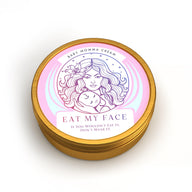
Our fragrance-free tallow cream is built around that idea. There's no water in the formula, so every fingertip is lipid, not something that evaporates in a minute. There's no added fragrance and no essential oils. It comes in a 4 oz metal tin with a screw-top lid, and the nine ingredients are the whole label, printed in full. Grass-fed tallow, edible-grade ingredients, nothing you'd need to look up. The full rundown of what we use (and leave out) is on our ingredients page.
One honest quirk of real tallow: heat softens it. If a hot delivery truck melts the tin and it sets back up a little grainy, give it a 20-minute reset. Melt it on your oven's Warm setting with the lid off until it's clear, then 30 minutes in the fridge. Smooth again, and it works exactly the same. More on how parents use it day to day is on our tallow for baby page, and the whole lineup lives in the baby lotion collection.
And because "baby" lotion has never really been just for babies: the same tin works on your knuckles after the fortieth hand-wash of the day. Nothing in it is baby-only.
Swap the pump for the tin. The Baby & Momma Cream is the fragrance-free one, built on grass-fed beef tallow, shea butter, cocoa butter, arrowroot powder, sea buckthorn oil, vitamin E, jojoba oil, fractionated coconut oil and cetyl alcohol. For bath night, the Unscented Tallow Soap Twin Pack is two six-ingredient bars with no added fragrance and no essential oils.
Quick answers
What is the best baby lotion?
The best baby lotion is fragrance-free, has a short ingredient list you can read in full, and gets used right after the bath on slightly damp skin. A cream beats a thin lotion for dry skin, and a water-free tallow cream gives the most moisture per dab.
Is baby lotion the same as baby cream?
No. A lotion is the thinner, more watery format, and a cream is richer. The American Academy of Dermatology says ointments and creams add more moisture to skin and are more effective than lotions, which is why we make a cream.
How often should you put lotion on a baby?
Right after bath time is the main moment. The AAP suggests about three baths a week may be enough in the first year, with a small amount of fragrance-free moisturizer after each one. On other days, use it whenever skin looks or feels dry.
Can you use lotion on a newborn?
Yes, a small amount of a fragrance-free moisturizer after the bath. The AAD's newborn guidance says that if your baby's skin is dry after bathing, apply a fragrance-free moisturizer or consider bathing less often. Keep baths short and lukewarm.
What makes a baby lotion non toxic?
The word on the front tells you very little; the list on the back tells you nearly everything. Look for fragrance-free, a short list, ingredients you recognize, and a clear first ingredient. If water comes first, most of the bottle is water plus the ingredients needed to manage it.
Can adults use baby lotion?
Absolutely. A good baby lotion is just a gentle, fragrance-free moisturizer, and that suits grown-up skin too. Our tallow cream is named for both of you, and it works just as well on your own hands and face.
Sources
- American Academy of Pediatrics. "Bathing Your Baby." HealthyChildren.org. https://www.healthychildren.org/English/ages-stages/baby/bathing-skin-care/Pages/Bathing-Your-Newborn.aspx
- American Academy of Dermatology. "How to bathe your newborn." https://www.aad.org/public/everyday-care/skin-care-basics/care/newborn-bathing
- Telofski LS, Morello AP 3rd, Mack Correa MC, Stamatas GN. "The Infant Skin Barrier: Can We Preserve, Protect, and Enhance the Barrier?" Dermatology Research and Practice. 2012. https://pmc.ncbi.nlm.nih.gov/articles/PMC3439947/
- Blume-Peytavi U, et al. "Recommendations from a European Roundtable Meeting on Best Practice Healthy Infant Skin Care." Pediatric Dermatology. 2016;33(3):311–321. https://pmc.ncbi.nlm.nih.gov/articles/PMC5069619/
Ready to try it? Beef Tallow Baby & Momma Cream - Gentle Daily Moisture is in stock and ships fast — $24.99. 180 days to decide.


