

Soap for Sensitive Skin: How to Pick a Bar That Won't Pick a Fight With Your Face
The best soap for sensitive skin is a short-label bar built on a fat your skin already recognizes, with no fragrance of any kind, its own glycerin left in, and nothing on the box you have to look up. That is four checks, not one, and most bars fail at least one of them. Our pick is the Unscented Beef Tallow Soap Bar: six ingredients, grass-fed beef tallow first on the label, no essential oils, no added fragrance, made in small batches in Eugene, Oregon.
Sensitive skin is not rare and it is not in your head. A 2019 review in Frontiers in Medicine put it at roughly 60 to 70 percent of women and 50 to 60 percent of men reporting some degree of it, and defined it the way you would: stinging, burning, itching or tingling from things that should not cause any of that. The same review lists the usual triggers, and "personal care products" and "cleaning products" sit right there next to weather and air conditioning. Soap is both of those things at once. No wonder it is where the trouble usually starts.
Why sensitive skin and most soap do not get along
Here is the chemistry in one breath. Your skin's surface runs mildly acidic, about pH 5.4 to 5.9. A bar of true soap is alkaline, because soap is what you get when fat meets lye. When a team of dermatologists measured 64 bathing soaps in 2014, 53 of them landed between pH 9 and 10 and only two sat inside the skin's own range. Their conclusion was blunt: the further a soap drifts from the skin's pH, the more "dehydrative effect, irritability and alteration in bacterial flora" you can expect.

So why does one pH-9 bar feel like a warm towel and another feel like sandpaper? Because the number is only the start of the story. What a bar does to sensitive skin is decided by what it is made of, what was added to make it smell nice, and what was taken out to make it cheaper. Those are the four checks below. We wrote a longer piece on why soap dries your skin out if you want the full pH story.
Soap for sensitive skin: the four checks
Check 1: what fat is the bar made from?
Soap is fat with its chemistry rearranged, so the fat decides almost everything about how a bar behaves. In soapmaking, the hard saturated fatty acids, palmitic and stearic, give you a firm, long-lasting bar with a dense, lotion-like lather. Coconut oil brings big bubbles and strong cleansing, which is wonderful in a dish soap and a lot to ask of a face. Soft oils like olive and almond condition nicely but lather slowly and make a softer bar that melts fast in the dish.
Grass-fed beef tallow lands in the sweet spot on its own. A 2024 scoping review in Cureus describes it as rich in oleic, palmitic, stearic and linoleic acids, and the same paper notes that palmitic, stearic, oleic and linoleic acids are among the main fatty acids in the outer layer of human skin. Read those two lists again. Tallow soap is made from the fats your skin's surface is already built from, which is the single best reason it tends to feel calm where a plant-oil bar can feel squeaky. That is the whole case in the science of tallow soap, and it is why a tallow bar needs only a little coconut oil for lather instead of a lot.
People ask us about tallow soap versus shea butter or almond oil soap for sensitive skin more than almost anything else. Shea and almond are lovely fats. We put shea in our own bar. But a soap that is mostly soft oils has to lean on something else for hardness and lather, and that something is usually a heavy dose of coconut or palm. Tallow does the hard-bar job itself, so the recipe stays short. If you want the side-by-side on the moisturizer version of that question, it is in tallow vs shea butter for skin.
Check 2: does "unscented" actually mean no fragrance?
Fragrance is the most common thing sensitive skin objects to in a bar, and the label is allowed to be slippery about it. "Unscented" is not a promise. The American Academy of Dermatology says it outright: pick products labeled "fragrance free," and "remain cautious with certain skin care products that are labeled 'unscented' or have plant-based botanical ingredients, as these products may still have fragrance-related ingredients." An unscented bar can carry a masking fragrance to cover the smell of its base. A "natural" bar can be loaded with essential oils, which are fragrance by another name and exactly what reactive skin tends to argue with.
What you want on the box is a plain fragrance line. Ours reads "none added; no essential oils," and the reason we can print that is boring and useful: properly rendered beef tallow has little to no scent, so there is nothing to mask. The citrus and mint bars in our lineup are scented with real essential oils and plenty of sensitive-skinned people use them happily, but if your skin is in a reactive stretch, start with the unscented one. We went deep on the label tricks in how to spot a fragrance free soap that actually is one.
Check 3: how long is the ingredient list?
A short list is risk management. Every ingredient is one more thing your skin can object to, and on sensitive skin the odds compound. Here is the entire label on our Unscented bar: grass-fed beef tallow, water, sodium hydroxide, coconut oil, cocoa butter, shea butter. Six things. The sodium hydroxide is the lye that turns fat into soap, and none of it survives the process in a properly made bar. Everything else is a fat you could cook with.

When a soap label runs to fifteen lines, scan for three kinds of filler: detergents and foam boosters (sodium lauryl sulfate, cocamidopropyl betaine), synthetic colorants, and the word "fragrance" or "parfum" anywhere at all. A label is allowed to lump every scent ingredient under that single word, so one word can stand for dozens of molecules. If you want to see how we think about every ingredient across the range, the ingredients page lists them all, with the reason each one is there.
Check 4: what the bar leaves behind
Two bars can share a pH and feel nothing alike, and the difference is what is left in the bar after the chemistry is done. First, glycerin. Every batch of real soap makes its own glycerin as a byproduct, and a small-batch cold-process bar keeps it, where large-scale soap production commonly pulls it out to sell separately. Glycerin is a humectant. It is the part of the bar that keeps your skin from feeling tight ten minutes after the shower.
Second, the extra fat. Small-batch soapmakers deliberately use a little more fat than the lye can convert, so a portion of the tallow, cocoa butter and shea butter stays as fat in the finished bar instead of becoming soap. That unconverted fat is why a good tallow bar rinses clean but leaves skin feeling conditioned rather than stripped. It is also why ours does not leave you chasing it with lotion after every wash. We did not design the bar to replace your moisturizer. We designed it to stop undoing it.
How to switch soaps without a bad week
Sensitive skin punishes sudden changes, so do not swap your whole routine on a Monday. The AAD's method for any new product is a patch test: a quarter-sized spot where it will not be rubbed or washed away, like the underside of your arm or the bend of your elbow, twice a day for seven to ten days. If nothing goes red, itchy or swollen, the bar has earned a promotion to your face.

Then fix the washing itself, because technique matters almost as much as the bar. The AAD's dry-skin guidance is specific: keep baths and showers to five to ten minutes in warm water, wash with a gentle cleanser, and use enough to lift the dirt and oil but not so much that you see a thick lather. Pat dry. Then put your moisturizer on while the skin is still damp, right after the shower or after washing your hands, because that is when it holds the most water in. Creams and ointments do that job better than lotions, which is the dermatologists' line rather than ours, though it happens to describe a tallow cream exactly. The full routine is in natural skincare for sensitive skin.
The bar we would hand you
If you have read this far you already know which one. Grass-fed beef tallow first on the label, six ingredients, no fragrance of any kind, and a dense creamy lather that works on face, body and hair, so one bar replaces three bottles on the shelf. It is the bar we point people to when they tell us their skin argues with everything, and the one we would start with ourselves after a reactive stretch. The rest of the lineup, scented bars included, is on the tallow soap collection, and the best tallow soap guide ranks them by skin type.
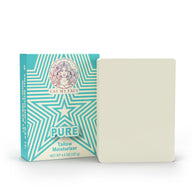
Unscented Beef Tallow Soap Bar
Six ingredients: grass-fed beef tallow, water, sodium hydroxide, coconut oil, cocoa butter, shea butter. No added fragrance, no essential oils. A 4.5 oz bar in a paperboard box, made in small batches in Eugene, Oregon, and each bar lasts about four to six weeks with daily use on face, body and hair.
Shop the Unscented Tallow Soap Bar, or grab the twin pack and keep one at the kitchen sink.
For the cream that goes on afterwards: The Baby & Momma Cream is the fragrance-free one, built on grass-fed beef tallow, shea butter, cocoa butter, arrowroot powder, sea buckthorn oil, vitamin E, jojoba oil, fractionated coconut oil and cetyl alcohol.
Quick answers
Is tallow soap good for sensitive skin?
Yes, and the reason is specific. Tallow is mostly palmitic, stearic and oleic acids, the same fatty acids that make up a large share of your skin's own surface lipids, so a tallow bar cleans with a dense, creamy lather instead of a stripping one. Pick an unscented tallow bar with a short label and you have covered the three things sensitive skin reacts to most: fragrance, detergents and a long list of extras.
What is the pH of tallow soap, and does it matter for sensitive skin?
A true tallow bar is alkaline like every real soap, in the same pH 9 to 10 band where most of the bar soaps measured in the 2014 study landed. The number matters less than what surrounds it: a bar that keeps its glycerin, carries a little unconverted fat and adds no fragrance feels gentle at that pH, while a detergent bar with perfume does not. Wash warm, rinse well and moisturize while damp, and the pH question mostly takes care of itself.
Tallow soap vs shea butter or almond oil soap for sensitive skin: which is gentler?
Both can be gentle, but tallow gets there with a shorter recipe. Shea and almond are soft fats, so a bar built on them usually needs a large share of coconut or palm oil for hardness and lather, and coconut-heavy bars clean aggressively. Tallow makes a hard, long-lasting bar with a creamy lather on its own, which is why our Unscented bar needs only six ingredients, shea butter included.
Can I use one bar on my face and body?
With a tallow bar, yes. Ours is made for face, body and hair, and the same six-ingredient formula works everywhere because nothing in it is built for one job at the expense of another. Use less than you think on the face, rinse with warm rather than hot water, and follow with a cream while the skin is still damp.
Is "fragrance free" the same as "unscented"?
No. "Unscented" means the product has no noticeable smell, which it can achieve with a masking fragrance. "Fragrance free" means no fragrance ingredients were added. The AAD tells people with reactive skin to choose fragrance free and stay cautious with unscented and botanical products. Our bar's label reads "none added; no essential oils," which is the version you want.
How long does a tallow soap bar last?
About four to six weeks with daily use, because tallow's hard fats make a dense bar that does not melt away in the dish. Keep it on a draining soap dish between showers and it lasts toward the long end of that range. One 4.5-ounce bar used on face, body and hair replaces both a face wash and a body wash on the shelf.
Sources
- Farage MA. The Prevalence of Sensitive Skin. Frontiers in Medicine, 2019 (PMC6533878).
- Tarun J, Susan J, Suria J, Susan VJ, Criton S. Evaluation of pH of Bathing Soaps and Shampoos for Skin and Hair Care. Indian Journal of Dermatology, 2014 (PMC4171909).
- American Academy of Dermatology. How to test skin care products.
- American Academy of Dermatology. Dermatologists' top tips for relieving dry skin.
Ready to try it? Unscented Beef Tallow Soap Bar - Fragrance-Free is in stock and ships fast — $13.99. 180 days to decide.

