

The Honest Guide to Natural Moisturizers for Rosacea-Prone, Reactive Skin
If your skin is rosacea-prone or just reacts to everything, the moisturizer itself matters less than what's not in it. Look for a short ingredient list you can actually read, no added fragrance or a barely-there trace, and no harsh actives (retinoids, high-strength acids, alcohol, essential-oil bombs) that can sting reactive skin. Simple, edible-grade tallow balms fit that brief: grass-fed beef tallow has a fatty-acid profile close to human sebum, so it absorbs in rather than sitting on top, and a formula like ours runs about nine ingredients. Patch test any new product for a few days first — and people with reactive, flush-prone skin tell us this is the first moisturizer their face didn't argue with.
Is beef tallow good for rosacea-prone skin?
Yes — for reactive, flush-prone skin it's the simplest, most comfortable moisturizer we know, and customers with rosacea-prone skin tell us it's the one their face finally stopped fighting.
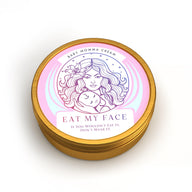
What tallow does have going for reactive skin is simplicity and biocompatibility. Grass-fed beef tallow's fatty-acid profile closely mirrors the oils your own skin makes (sebum), so it tends to absorb in rather than sit on top. It also rates around a 2 on the 0–5 comedogenic scale (low likelihood of clogging) — for contrast, coconut oil sits near a 4. That said, every face is different; "low comedogenic" is a tendency, not a promise, which is exactly why you patch test.
If your skin flushes at the smallest provocation, the appeal is a formula with nothing exotic to react to. That's a gentleness argument, not a medical one. For the condition itself, a dermatologist is the right call.
What ingredients should someone with reactive skin avoid?
Reactive and rosacea-prone skin usually does best when you subtract, not add. Common triggers people react to include:
- Added synthetic fragrance / heavy essential oils — one of the most frequent culprits for stinging and flushing.
- Alcohol (denatured/SD alcohol) — can feel tight and drying on already-sensitive skin.
- Harsh actives — high-strength AHAs/BHAs, retinoids, and strong vitamin C can overwhelm a compromised barrier.
- Menthol, camphor, witch hazel, peppermint/eucalyptus — "cooling" or "tingling" sensations are often irritation.
- Long, unpronounceable ingredient decks — more ingredients means more things to potentially react to.
The through-line: shorter and simpler is safer for skin that overreacts. That's the logic behind an edible-grade tallow balm — ours is roughly nine ingredients, all organic and all things you could technically eat. Fewer variables, fewer surprises. (Fragrance note: our Original carries only a trace of vanilla; if you're highly fragrance-reactive, reach for the truly fragrance-free option — more on that below.) None of this diagnoses or treats rosacea — it just lowers the number of things that might set reactive skin off.
Is tallow or a drugstore cream better for sensitive skin?
Neither category wins automatically — it comes down to the ingredient list, not the aisle it's sold in. Compare decks, not brands. Here's how to read a clean skin care label without the badge doing your thinking for you.
Many well-formulated drugstore creams for sensitive skin lean on ceramides, glycerin, and petrolatum, and deliberately skip fragrance — those are solid, barrier-friendly choices. Where some fall short for the "if I wouldn't eat it, I don't want it on my face" crowd is a longer synthetic ingredient list and preservatives or fragrance some reactive users flag.
A simple tallow balm takes the opposite approach: a handful of whole-food-grade fats (tallow, shea, cocoa butter, jojoba, sea buckthorn) and nothing synthetic. The trade-off is honesty in the other direction — tallow has far less large-scale clinical testing behind it than the mainstream sensitive-skin ingredients, and zero trials for rosacea specifically. So: if you want maximum research backing, a fragrance-free drugstore ceramide cream is a reasonable pick; if you want the shortest, most transparent, edible-grade deck, tallow is worth a patch test. Both can suit sensitive skin.
Can I use a tallow-based sunscreen on reactive skin?
Sun is one of the most common rosacea-prone triggers, so daily SPF matters — and the type of filter is the part reactive skin cares about. Mineral (physical) sunscreens use zinc oxide, which sits on top of the skin and absorbs UV right there rather than soaking into it, giving it a very low irritation profile. That makes zinc oxide a gentle mineral option many people with eczema-, rosacea- or reactive-prone skin reach for.
Our SPF 30 Mineral Sunscreen is built for exactly this: non-nano zinc oxide only, no chemical UV filters, and it's genuinely reef-safe (no oxybenzone, octinoxate, or octocrylene). It's labeled "For Sensitive Skin," tinted with a touch of organic cacao so it blends in without the classic white cast, and the inactive base is the same edible-grade lineup (grass-fed tallow, jojoba, shea, sea buckthorn). As always, patch test first, and reapply as directed. See the SPF 30 sunscreen PDP for details.
How do I patch test a new moisturizer?
Patch testing is non-negotiable when your skin reacts easily — it's the cheapest insurance there is. Here's the simple version:
- Pick a discreet spot — inner forearm, or just in front of/below the ear near the jaw if you want a face-adjacent test.
- Apply a small amount of the product and leave it alone.
- Wait 24 hours, then reapply and wait another 24 — a few days total is even better for slow reactions.
- Watch for redness, itching, stinging, bumps, or burning. Any of those means stop.
- If it's calm after a few days, work it into your routine slowly — one new product at a time so you always know what caused what.
Introducing products one at a time is the whole game for reactive skin: if something flares, you can actually identify the culprit. And if you're patch testing because of persistent redness, visible vessels, or flushing, loop in a dermatologist — patch testing tells you if a product irritates you; only a doctor can diagnose rosacea.
Which Eat My Face product is right for you?
- Original Tallow Moisturizer — 4 oz, ~11 ingredients, grass-fed beef tallow first, all organic and all edible. Carries only a trace of vanilla (vanilla oleoresin at ~0.05%) — not fragrance-free, so we won't call it unscented. Simple deck for skin that likes fewer variables.
- Unscented Tallow Moisturizer — if you're highly fragrance-reactive and even a trace of vanilla is a no-go, EMF also makes a truly fragrance-free Unscented version. Same short, edible-grade philosophy, zero added scent.
- SPF 30 Mineral Sunscreen — non-nano zinc oxide, reef-safe, "For Sensitive Skin," tinted with organic cacao.
Bottom line: read the full ingredient lists on each PDP, patch test before you commit, and give it two weeks — reactive-skin customers tell us that's when their face stops fighting them.
Ready to try it? Beef Tallow Baby & Momma Cream - Gentle Daily Moisture is in stock and ships fast — $24.99. 180 days to decide.


