

Tallow Slugging: Can You Slug With Tallow Instead of Petroleum Jelly?
Last updated: July 2026
The short answer: yes, you can slug with tallow. Slugging just means sealing your skin with an occlusive layer overnight — and while petroleum jelly is the classic (and the tighter seal), tallow does the job while bringing something petroleum can't: fatty acids that overlap with your skin's own sebum, plus vitamins A, D, E, and K. Slug on clean skin, use a thin layer, and go slow if you're acne-prone.
New to tallow? Start with our complete beef tallow for skin guide — what it is, why it works, and who it's for.
Slugging escaped the K-beauty corner of the internet years ago, and at this point the question lands in our inbox weekly: "Do I have to use petroleum jelly, or can I just slug with my tallow?"
You can. And once you understand what slugging is actually doing, you'll see why tallow isn't a compromise version of the trick — it's a different take on it, with its own trade-offs. Let's walk through it honestly.
What slugging actually is
Slugging is a one-move technique: as the last step of your nighttime routine, you coat your face in a thin layer of an occlusive — a substance whose job is to sit on the surface and slow water from evaporating out of your skin. Then you sleep. That's the whole trick.
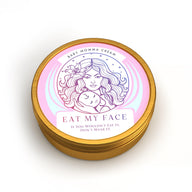
The name comes from the glazed, snail-trail sheen you're left with. No snails are involved, which is honestly a little disappointing for a skincare trend name.
Why bother? Because your skin loses more water overnight — the barrier gets a little leakier while you sleep, which is why you can wake up tight and dry after a full eight hours. (It's the same reason our whole two-step nighttime routine is built around "clean, then seal.") An occlusive layer slows that overnight water loss down, so your skin stays hydrated while it runs its repair shift.
The classic slug: petroleum jelly
Let's give the incumbent its due, because the incumbent has earned it. Petroleum jelly — petrolatum, if we're being formal — is one of the most effective occlusives ever studied. Dermatologists recommend it constantly for dry skin, and research going back decades shows it doesn't just sit on the surface like plastic wrap: it works into the spaces of the outermost skin layer and supports the barrier while it recovers. It's cheap, it's fragrance-free, and refined petrolatum is famously unlikely to clog pores.
Here's the flip side, and it's not a scandal — it's just chemistry: petrolatum is deliberately inert. It contains nothing your skin can use. No fatty acids, no vitamins, no raw material. It's a security guard: extremely good at standing at the door, not much for feeding anyone inside.
For a lot of people, that's exactly what they want. But it's also why the tallow question keeps coming up.
Slugging with tallow: what changes
Tallow is rich in the same families of fatty acids that make up heavy-duty occlusives — stearic and palmitic acid — so it forms a genuine moisture seal. But unlike petrolatum, those fatty acids aren't inert filler. Oleic, palmitic, and stearic acid are also major components of human sebum, the oil your skin makes on its own, and grass-fed tallow carries fat-soluble vitamins A, D, E, and K along with them.
So the honest comparison goes like this: petroleum jelly is the tighter seal. Lab for lab, very little beats it at pure occlusion. Tallow trades a bit of that airtightness for material your skin actually recognizes. The petroleum slug is a tarp. The tallow slug is a blanket that also brought snacks.
There's a comfort difference too. Petrolatum leaves you glossy and slightly adhesive — pillowcases notice. Tallow goes on rich, then settles in rather than sitting on top all night, because your skin treats sebum-like lipids as familiar rather than foreign. And where petroleum jelly smells like nothing, a tallow slug smells like whatever your tallow smells like — ours comes in a lavender-chamomile nighttime version built for exactly this hour of the day, and an Original if you want it simple.

Side by side
| Petroleum jelly slug | Tallow slug | |
|---|---|---|
| What it is | Highly refined mineral-oil derivative | Rendered grass-fed beef fat, whipped with plant oils |
| Seal strength | The gold standard — very little beats it | Strong, slightly more breathable |
| What your skin gets | Nothing — it's deliberately inert | Sebum-like fatty acids + vitamins A, D, E, K |
| Overnight feel | Glossy film that stays put (pillowcases notice) | Rich at first, settles in as you sleep |
| Scent | None | Your pick — calming lavender-chamomile, or unscented |
| Pore-clogging risk | Very low when refined | Richer — acne-prone skin should start slow |
How to slug with tallow
- Cleanse gently. Slugging seals in whatever's on your face, so make sure that's not the day's sunscreen and city air. A non-stripping bar like our Unscented Tallow Soap gets you clean without wrecking the barrier you're about to protect.
- Leave your skin slightly damp. Pat, don't rub. That trace of water is the moisture you're locking in.
- Go thin. A pea-sized scoop, warmed between your fingers, pressed over your face and neck. A slug is a film, not frosting — if you look like a glazed donut, take some back.
- Give it ten minutes before your pillow. Or accept a small pillowcase tax and designate a slugging pillowcase. We won't judge.
- In the morning, cleanse as usual. That's it. No step six.
How often? For most people one to three nights a week is plenty. Very dry skin in dry-air season can go nightly. If your skin runs oily, you may never need to slug at all — and that's fine.

Who should skip slugging (or slug carefully)
- Oily or acne-prone skin. An occlusive seals in everything, including the oil and debris that clog pores. Dermatologists generally advise acne-prone folks to sit this trend out — or test it very slowly. We wrote an honest look at tallow and acne-prone skin if that's you.
- Nights you use strong actives. Sealing a retinoid or an exfoliating acid under an occlusive layer intensifies it — which sounds like a life hack and feels like a sunburn. Keep slug nights and strong-active nights separate.
- Sticky, humid weather. If it's a swampy July night and your skin already feels fine, it doesn't need a tarp or a blanket. Slugging earns its keep in dry air — winter radiators, desert climates, long flights, and aggressive AC.
Quick answers
Do you have to use petroleum jelly to slug?
No. Slugging is defined by the move — a final occlusive layer overnight — not by the jar. Petroleum jelly is simply the cheapest, most-studied way to do it. Tallow is a strong occlusive too, with the bonus of sebum-like fatty acids and vitamins your skin can actually use.
Will slugging with tallow break me out?
Everyone's skin is different, and slugging concentrates whatever your skin was already doing. If you're acne-prone, start with one night a week on freshly cleansed skin and watch how your skin responds before making it a habit — or skip slugging entirely and just use a thin layer of tallow as your regular night moisturizer.
How many nights a week should you slug?
One to three nights a week suits most people. Genuinely dry skin in dry-air months can handle nightly slugging. Oily skin may not benefit at all. Your skin votes every morning — count the ballots.
Can I slug over retinol?
Better not to. Occlusion drives actives deeper and effectively turns the volume up, which raises the odds of irritation. Slug on your off nights, or check with your dermatologist if you don't want to choose.
Want a slug that feeds your skin?
Our Nighttime Restorative Cream ($24.99) is the purpose-built version: grass-fed tallow for the seal, cocoa and shea for richness, and a soft lavender-chamomile scent that tells your brain the day is over. Prefer no scent at all, or one tin for day and night? The Original slugs just fine.

Ready to try the tallow slug?
Start with the Nighttime cream. If it doesn't work for your skin, we'll make it right — every tin comes with our 30-day money-back guarantee.
Building out the rest of your evening? Here's the full two-step nighttime routine, and if you're still weighing tallow against conventional moisturizers, we broke down what's actually different between tallow and lotion.
Sources
Ready to try it? Beef Tallow Baby & Momma Cream - Gentle Daily Moisture is in stock and ships fast — $24.99. 180 days to decide.


