

We Have Beef With the Beef the Beef People Have About Beef Tallow Sunscreen
A national newspaper just published a warning that beef tallow doesn’t work as sunscreen. Stop the presses. Next week, we hear they’re investigating whether a raincoat makes a reliable parachute.
So, in the time-honored tradition of the beef people having beef with beef, we’d like to have a little beef of our own.
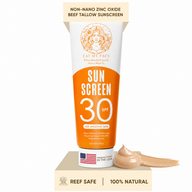
The short version: they’re right that a tub of plain beef tallow is not sunscreen. They’re just aiming that warning at the wrong people. Eat My Face SPF 30 isn’t “just tallow” — it’s grass-fed tallow plus non-nano zinc oxide, a real mineral UV filter, labeled broad-spectrum SPF 30. The zinc blocks the burn. The tallow babies your skin. Those are two very different products wearing the same word.
Where they’re not wrong
Here’s the steel-manned version, because we’re not in the business of pretending experts are dumb. A pharmacist on TikTok reacted to a guy who got absolutely torched after rubbing on a homemade tallow balm with zero SPF. Dermatologists piled on with the obvious: plain animal fat has no meaningful SPF, and greasing up bare skin before you walk into the sun can make a burn worse, not better.
All true. We agree. Smearing kitchen fat on your face and strolling into a July afternoon is a genuinely bad idea. If that’s the lesson someone needed, great — consider it delivered.
So what’s our beef?
The beef is the bait-and-switch. The headline says “beef tallow sunscreen.” The article debunks “beef tallow” — the fat, on its own, with no UV filter anywhere in sight. Those are not the same thing, and treating them as one is like reviewing a screen door and concluding that submarines leak.
The “tallow sunscreen” getting dunked on is the DIY crowd: no zinc, no testing, no SPF number anywhere on the jar. A real tallow mineral sunscreen is a different animal entirely. (Pun absolutely intended. We’ve made our peace with the puns.)
What actual tallow sunscreen looks like
Real tallow sunscreen — the kind with an SPF number it earned in a lab — works because of what gets added to the tallow:
- Non-nano zinc oxide as the only UV filter. We use Z-Cote from BASF, the same broad-spectrum mineral zinc you’ll find in serious mineral sunscreens. It sits on top of your skin and soaks up about 95% of UV, turning it into a trace of heat (the rest scatters).
- A named mineral active, not a guess. Non-nano zinc oxide from Z-Cote (BASF), the only active — not “estimated from the recipe.” SPF 30 blocks roughly 97% of UVB, which is the sweet spot for daily wear.
- Grass-fed tallow as the base — so instead of a chalky paste that just sits there, you get something that absorbs and feeds your skin barrier the fatty acids it already uses.
- No chemical filters, no seed oils, reef-safe (non-nano zinc isn’t on the banned-in-reef-waters list).
Want the tell for spotting a real one versus a moisturizer with a marketing budget? It has an SPF number on the label, it names its UV filter, and it’ll tell you the zinc is non-nano. Ours does all three. Meet the SPF 30 tube — reef-safe, non-nano, and yes, made with ingredients clean enough that our tagline isn’t a bluff.
Already a little crispy? We’ve got you.
Maybe you found one of those “tallow IS sunscreen” DIY recipes before we got to you, and now you’re roughly the color of a stop sign. First, the tough love: lesson learned, wear real SPF. Second, the actual love: we made something for exactly this moment.
Our After Sun balm with aloe and cucumber is built to cool the heat and comfort tight, stinging, sun-stressed skin while replenishing the moisture a long day outside strips away. We’ll be straight with you — it’s not a burn treatment, and we won’t pretend it is. A bad burn is a doctor thing. This is a deeply soothing balm for skin that spent a little too long in the sun.
Smart move for the season: keep the sunscreen + after-sun duo in your bag. Block first, soothe second. (And if you’d rather build your own kit, everything lives in our tallow sunscreen collection.)
The bottom line
Don’t rub plain fat on your face and call it sun protection. The derms are right about that one, and so are we. Do wear a real mineral SPF 30, reapply it like you mean it, and keep an after-sun balm around for the days you push your luck. We happen to make both — and unlike the stuff in the headlines, ours comes with an SPF number it actually earned.
That’s our beef. Thanks for hearing us out.
FAQ: Beef Tallow Sunscreen, Honestly
Does beef tallow work as sunscreen?
Plain beef tallow on its own does not — it has no meaningful SPF and is not a UV filter. Tallow combined with non-nano zinc oxide, formulated as a mineral sunscreen with zinc oxide as the labeled active, does: the zinc provides the SPF 30 protection while the tallow nourishes your skin. Read the full breakdown in our does beef tallow sunscreen work explainer.
Is Eat My Face sunscreen just beef tallow?
No. It is a grass-fed tallow base plus non-nano zinc oxide as the active UV filter, labeled broad-spectrum SPF 30. The tallow is the carrier and skin conditioner; the zinc does the sun protection.
Did dermatologists say beef tallow sunscreen is dangerous?
The warnings were aimed at DIY tallow balms with no SPF active — using plain fat in place of sunscreen. A formulated mineral sunscreen with a stated non-nano zinc percentage is a different product and is not what those warnings describe.
Can beef tallow make a sunburn worse?
Putting plain oil or fat on bare skin with no UV filter before sun exposure can increase burn risk. After you have been in the sun, a soothing after-sun balm is a comfort and moisture step — not a medical burn treatment.
Is your tallow sunscreen reef-safe?
Yes. It uses non-nano zinc oxide, which is not among the filters banned in reef-protected waters.
Related reading
- The Complete Guide to Tallow Mineral Sunscreen (SPF 30, Non-Nano Zinc)
- Does Beef Tallow Sunscreen Work? SPF 30 Mineral Protection Explained
Wear sunscreen that actually earned its SPF:
Ready to try it? Beef Tallow Tinted Sunscreen Tube SPF 30 is in stock and ships fast — $24.99. 180 days to decide.


