

Beef Tallow vs CeraVe: The Honest Comparison (Ingredients, Dry Skin, Eczema)
📘 Reading about eczema? Read our complete Beef Tallow for Eczema Honest Guide → for the babies-vs-adults breakdown, comparison vs CeraVe and Aquaphor, when NOT to apply tallow, and a full AM/PM routine.
Short answer: CeraVe is a drugstore moisturizer built on petroleum, synthetic ceramides, and fragrance. Grass-fed beef tallow is a single-ingredient balm whose fatty acids naturally match human skin lipids. If you care about ingredient quality, tallow wins. If you want the cheapest option at Target, CeraVe wins. Here's the honest, head-to-head breakdown — no affiliate spin, just what's actually in each jar. For the background on the ingredient itself, start with our beef tallow for skin guide.
What is CeraVe?
CeraVe is a dermatologist-developed moisturizer line owned by L'Oréal. Its signature product is CeraVe Moisturizing Cream, formulated with three ceramides (1, 3, 6-II), hyaluronic acid, and a petroleum-based occlusive blend. It's sold at most drugstores for $14-20 per 16 oz tub. The brand is well-marketed and widely pediatrician-recommended for eczema-prone skin.
For the full science of what beef tallow actually does for face skin, we wrote a complete guide covering the fatty acid match to sebum, who it's for, and how to use it AM/PM.
What is beef tallow skincare?
Beef tallow skincare uses rendered fat from cattle (ideally grass-fed) as the primary moisturizing base. The reason it works: tallow's fatty acid profile — palmitic, stearic, oleic, and palmitoleic acids — closely matches the lipids your own skin produces. That biological similarity is why tallow absorbs fast and doesn't sit on top of skin like plant oils or petroleum products do.
If you're new to tallow on the face, start with our complete guide to beef tallow for face — benefits, routines, ingredients to avoid, and recommended products by skin type.
The Eat My Face Original Beef Tallow Moisturizer is built on grass-fed tallow with shea butter, cocoa butter, jojoba oil and vitamin E: eleven ingredients, no water. Every one is edible-grade. If you wouldn't eat it, don't wear it.
Is beef tallow better than CeraVe for dry skin?
For severely dry, eczema-prone, or barrier-compromised skin, beef tallow is often more effective than CeraVe because it replaces missing skin lipids with identical-to-human fatty acids. CeraVe works by adding synthetic ceramides, which help, but the underlying moisturizing matrix is petroleum-based and can feel heavy or occlusive.
For routine daily moisturizing on healthy skin, both work. CeraVe is fine. Tallow is cleaner. The choice comes down to ingredient philosophy.
CeraVe vs beef tallow: the head-to-head comparison
| Factor | CeraVe Moisturizing Cream | Grass-fed Beef Tallow |
|---|---|---|
| Ingredient count | 27+ ingredients | 11 ingredients (tallow, shea and cocoa butter, jojoba oil, vitamin E and six more) |
| Primary base | Petrolatum + mineral oil | Rendered grass-fed beef fat |
| Biocompatibility | Synthetic ceramides added | Naturally matches skin lipids |
| Preservatives | Phenoxyethanol, parabens | None (self-stable) |
| Fragrance | "Fragrance-free" but may contain masking agents | Unscented versions truly fragrance-free |
| Fat-soluble vitamins | Added synthetically | Naturally rich in A, D, E, K |
| Edible / food-grade | No | Yes |
| Texture | White cream, pumps from tub | Solid balm, melts on contact |
| Price per oz | $0.90-1.30/oz | $3.50-6.00/oz |
| Best for | Budget-conscious, mild dryness | Sensitive skin, eczema, ingredient-focused users |
Does CeraVe contain petroleum?
Yes. CeraVe Moisturizing Cream's top 5 ingredients include petrolatum (petroleum jelly) and mineral oil — both petroleum-derived. These are cheap, effective occlusives, but they're not ingredients you'd eat, and they don't participate in skin biology the way tallow's fatty acids do. They sit on top and block water loss.
Is CeraVe bad for you?
Not dangerous — but not optimal. CeraVe's formulation includes parabens (methylparaben, propylparaben), which the European Union has placed restrictions on due to concerns about endocrine disruption. The U.S. FDA still considers them safe. For sensitive skin, the fragrance masking agents and phenoxyethanol can occasionally trigger reactions.
If you prefer to avoid petroleum, parabens, and synthetic preservatives entirely, tallow is the cleaner alternative. If you don't care about that and the budget matters, CeraVe works fine.
Which is better for eczema — tallow or CeraVe?
Both can help, but they work differently. CeraVe's synthetic ceramides mimic the natural lipids eczema-prone skin is missing. Grass-fed tallow is the natural lipid — identical-to-human palmitic, stearic, and oleic acids. Many parents and adults with chronic eczema find tallow works faster because it doesn't require the skin to synthesize anything.
No single moisturizer cures eczema. Barrier repair is about consistent daily application with a clean, lipid-rich product. Pick the one your skin responds to and stick with it.
Can I use beef tallow on my face like CeraVe?
Yes. Beef tallow moisturizer is safe for daily facial use and doesn't clog pores because its fatty acid profile matches skin's own sebum. Start with a pea-sized amount, warm between fingertips, apply to clean skin morning and night. It absorbs in 60-90 seconds.
For a direct CeraVe replacement: the Original Beef Tallow Moisturizer for daytime, and the Nighttime Face Cream for overnight repair.
Which is cheaper — CeraVe or beef tallow?
CeraVe is significantly cheaper per ounce ($0.90-1.30/oz vs $3.50-6.00/oz for quality grass-fed tallow). But a jar of tallow lasts longer per application — a pea-sized amount covers the face, vs. a dime-sized dollop of CeraVe. Total cost per month ends up closer than the per-ounce price suggests.
Cheaper doesn't mean better, and ingredient quality costs money. Grass-fed tallow comes from pasture-raised cattle, rendered at low heat, with no synthetic additives. That's a different economic model than mass-produced petrochemical moisturizers.
Is beef tallow comedogenic? Will it cause breakouts?
No. Beef tallow has a low comedogenic rating because its fatty acids match the lipids your skin already produces. Your pores recognize it as "self" and don't clog. Contrast with coconut oil (highly comedogenic) or many oily cream bases that absolutely do break out acne-prone skin.
Should I switch from CeraVe to beef tallow?
Switch if:
- You want to avoid petroleum, parabens, and synthetic fragrances
- CeraVe isn't fully solving your dry-skin problem
- You prefer single-ingredient, food-grade products
- Someone in your household has a sensitive reaction to CeraVe's preservatives
Stick with CeraVe if:
- It's working, and budget is the priority
- You prefer a pump bottle over a jar/tin
- Your dermatologist specifically recommended it for a condition
FAQ: Beef tallow vs CeraVe
Is beef tallow moisturizer better than CeraVe?
For people focused on ingredient quality, sensitive skin, or avoiding petroleum and parabens — yes, grass-fed beef tallow is better. For people focused on price and easy drugstore access, CeraVe is fine. Both moisturize; they just do it through very different mechanisms.
Can I use beef tallow instead of CeraVe on my baby?
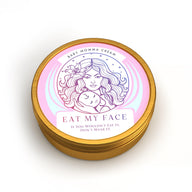
Yes. Many parents switch to unscented grass-fed tallow for babies with eczema or sensitive skin specifically because it removes petroleum, parabens, and synthetic fragrance from the routine. The Baby & Momma Cream is designed for exactly this use. Patch test first.
Is CeraVe vegan? Is tallow vegan?
CeraVe is not certified vegan — it's made by L'Oréal and may be tested on animals in markets that require it. It does not contain animal ingredients. Beef tallow is, by definition, not vegan. If veganism is a hard requirement, neither is a perfect choice, but unscented shea butter or 100% plant-oil blends exist.
Does beef tallow contain ceramides like CeraVe?
Beef tallow does not contain added ceramides, but it provides the raw lipid materials (fatty acids + cholesterol) that your skin uses to synthesize its own ceramides. CeraVe adds three specific ceramides directly. Different strategies, both aimed at supporting the skin barrier.
Can I layer tallow over CeraVe?
Yes, and some people do. Apply CeraVe (or any hydrator) first while skin is still damp, then seal with a thin layer of tallow balm. This combines hydration (water-based) with occlusion and lipid replacement.
How long does a jar of beef tallow moisturizer last?
A 2 oz jar used for daily face application lasts most people 2-3 months. A 4 oz jar lasts 4-6 months. Tallow is concentrated — a little goes a long way. Compared to burning through a CeraVe tub in 4-6 weeks at full-body use, the per-month cost difference narrows significantly.
Does tallow feel greasy like petroleum-based products?
No. Grass-fed tallow, properly rendered, absorbs in under 2 minutes. It feels like a soft balm that melts on contact with warm skin. It doesn't sit on the surface the way petroleum jelly or heavy mineral-oil creams do.
Is beef tallow FDA-approved?
Beef tallow is FDA-recognized as GRAS (Generally Recognized As Safe) for food use. For cosmetic use, the FDA does not pre-approve individual products (that's true of both CeraVe and tallow brands). Both are sold legally in the U.S. under standard cosmetic labeling rules.
Does tallow smell like meat?
No. Properly rendered, grass-fed tallow for skincare has almost no detectable scent. If a tallow product smells like a burger, it was rendered poorly. Our unscented moisturizer has no added fragrance and no beef smell.
Ready to try a cleaner alternative? Shop the Original Beef Tallow Moisturizer, or grab the Sensitive Skin Starter Pack to test both soap and cream together.
Related reading: Beef Tallow vs Coconut Oil: Which Works Better on Skin?
Related Reading
Ready to try it? Beef Tallow Baby & Momma Cream - Gentle Daily Moisture is in stock and ships fast — $24.99. 180 days to decide.


