

Do Dermatologists Recommend Beef Tallow? What They Actually Say (2026)
What do dermatologists actually say about beef tallow?
Short answer: the dermatologists quoted most on tallow agree on the part that matters for your face: its fats look a lot like your skin's own. "Tallow is mostly made of fatty acids found in the skin's natural barrier," says Dr. E. Victor Ross, who directs laser and cosmetic dermatology at Scripps Clinic. Dr. Anil Sharma told Healthline that beef tallow "closely mimics the skin's natural oils." And a 2024 review in Cureus found tallow's fatty acids overlap with the lipids in your skin's outer layer.
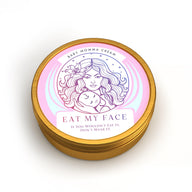
Where doctors stop short is the "dermatologist recommended" stamp. That stamp rides on clinical trials and brand-funded endorsements, a bar most drugstore lotions never clear either. For very dry skin, the job is simple: a fat your skin recognizes, holding water in where it belongs.
You'll still see skeptical headlines, from Children's Hospital of Philadelphia and Cleveland Clinic among others. Most of that pushback is aimed at big medical claims floating around social media, not at tallow as a moisturizer. Here's what each source says, and where they agree.
What the skeptics actually say
Children's Hospital of Philadelphia (February 2026)
Dr. Katie K. Lockwood, a pediatrician at CHOP, published a February 2026 piece specifically on beef tallow for eczema. Her conclusion: "there is no strong scientific evidence that it treats eczema better than other, medically proven options such as ceramides." She also notes that because beef tallow is animal-derived, it can sometimes cause allergic reactions or worsen skin sensitivity in children with eczema — and raises reasonable concern about variable product quality, since cosmetics don't require FDA pre-market approval.
She recommends moisturizers that are fragrance-free, free of common allergens, and thick in texture, with proven ingredients like ceramides. Fair enough. That's solid pediatric dermatology guidance.
What it is not is "tallow is dangerous." It's "we don't have the studies to say it's better than what we already know works." That's a meaningful distinction.
The PMC study on tallow and social media claims (2025)
A cross-sectional analysis published in the Journal of Cosmetic Dermatology in 2025 — "Beef Tallow‐Based Skincare Claims in Social Media" by Almatroud, Choi, Libson, and Ashack — looked at 200 posts across YouTube, Instagram, and TikTok. Their finding: claims about tallow clearing acne, treating atopic dermatitis, and helping psoriasis were "largely lacked cited evidence," and the majority of promoters showed financial bias. On Instagram, 92% of posts had financial bias. Dermatologists were least likely to recommend tallow (7%) and showed minimal financial bias (7%). The researchers concluded: "evidence remains insufficient to support these claims."
This is a legitimate critique of the social media ecosystem around tallow — which is often grifty, overclaiming, and disconnected from evidence. The study doesn't say tallow doesn't moisturize. It says the people selling it on social media mostly aren't scientists, often have a financial motive, and rarely cite anything real. That's true, and it's worth acknowledging.
Advanced Dermatology and Cleveland Clinic
Dr. Tushar Dabade, FAAD, writing for Advanced Dermatology, called the application of tallow to eczema and psoriasis "a clear research gap" and concluded there are "many more scientifically sound alternatives." Dr. Angela Wei at Cleveland Clinic told the Cleveland Clinic there's no evidence tallow has benefits beyond being a basic natural moisturizer, and that the lack of standardized formulation makes it hard to assess. These are representative of mainstream dermatology: not hostile, just underwhelmed.
Where the science and the dermatologists actually agree
Here's where it gets more interesting. The same dermatologists who are skeptical of tallow's medical claims tend to acknowledge the same basic facts that tallow fans point to.
Dr. Anil Sharma, speaking to Healthline, noted that "beef tallow closely mimics the skin's natural oils" — and he's not alone in saying that. Dr. E. Victor Ross, Director of Laser and Cosmetic Dermatology at Scripps Clinic, told Scripps Health directly: "Tallow is mostly made of fatty acids found in the skin's natural barrier." He acknowledged that for people with very dry skin and no history of breakouts, "a small amount may be tolerated."
A 2024 scoping review published in Cureus — "Tallow, Rendered Animal Fat, and Its Biocompatibility With Skin" — found that tallow's fatty acid composition (oleic, palmitic, stearic, and linoleic acids, plus fat-soluble vitamins) overlaps meaningfully with the lipid matrix of the stratum corneum. The review noted that tallow demonstrated "biocompatibility potential" with skin. It also found that one study showed tallow esters increased skin hydration by up to 47.2% after 180 minutes — that's not nothing. The same review was honest: there are significant research gaps, and more human-subject studies are needed.
The summary: tallow is a fat with a fatty acid profile that's structurally compatible with skin. It functions as an occlusive and emollient. Dermatologists who call it "just a moisturizer" are more right than they realize — and "just a moisturizer" is exactly what most people who reach for it are looking for.
What the criticism overstates
The "no clinical studies" argument gets a bit circular when applied to skincare specifically. The overwhelming majority of cosmetic moisturizers — including beloved drugstore staples — have not been through randomized controlled trials for eczema. The bar for "dermatologist recommended" moisturizers is usually: plausible ingredients, no known irritants, good tolerability data, and commercial backing that funds dermatologist endorsements. Clinical trials are the standard for drugs, not for lotions. When a dermatologist says tallow lacks clinical evidence, they're technically correct — and that standard would also sideline most of what's on the shelves at Target.
The safety concern is also worth contextualizing. The CHOP piece flags potential allergic reactions in eczema-prone children — a real and fair warning for a children's hospital to give. The Scripps and Cleveland Clinic pieces flag comedogenicity for acne-prone skin — also real and fair. But none of these sources are saying tallow harms healthy, intact, dry skin in adults. The risk profile for a well-sourced, unscented tallow product on dry skin is not alarming.
The PMC social media study is also specifically about overclaiming on social media — acne cures, psoriasis treatments, medical-grade results. It is not a study of whether tallow moisturizes. Conflating "TikTok hype is overblown" with "tallow doesn't work as a moisturizer" is a logic error. The study found that 7% of promoters were dermatologists with minimal financial bias — which means some dermatologists do think tallow is worth discussing; they're just not the ones running viral accounts selling it at markup.
Questions a good dermatologist would want you to ask
If you're considering beef tallow skincare — or recommending it — these are the questions that actually matter:
- How is it sourced and processed? Product quality varies enormously. Grass-fed, unbleached, undeodorized tallow from a regulated facility is different from rendered fat in an unlabeled jar from a farmer's market. If there's no manufacturing transparency, that's a real concern — not a theoretical one.
- Are you acne-prone? Tallow is comedogenic for some people. If you have oily or acne-prone skin, it's a reasonable thing to avoid — or at minimum, patch test. The dermatologists who flag this are right.
- Do you have a diagnosed skin condition? Eczema, psoriasis, and rosacea are medical conditions that deserve an actual diagnosis and a care plan from a dermatologist. Tallow may not make things worse (though it can in some eczema presentations, per CHOP), but it is also not a substitute for a real treatment protocol. If you have a persistent rash, unexplained flares, or your skin isn't getting better — see a doctor. Full stop.
- Have you patch tested? Dr. Ross at Scripps recommends testing a small area for one to two days and watching for redness, itching, burning, or bumps before applying broadly. That's good advice for almost any new skincare product.
- Is it scented? Fragrance is one of the most common skin irritants and a known trigger for eczema. If you're using tallow for dry or sensitive skin, unscented is the only version that makes sense.
Where Eat My Face stands on all of this
We're a tallow brand, so take this for what it is — but we try to be honest about it. We're not going to tell you our products are "dermatologist recommended," because they're not. We've never run clinical trials. No cosmetic moisturizer has to, and most don't.
What we do: we formulate with grass-fed, unbleached, undeodorized beef tallow, made in a USDA-registered, SQF Level 3 certified facility in the USA. That means third-party food-safety audits on our manufacturing. We don't add synthetic fragrance to products intended for sensitive skin. We don't claim our products treat or cure anything.
We also don't think you should use tallow instead of a dermatologist if you have an actual skin condition. If you have diagnosed eczema — especially in a child — please work with a doctor. The CHOP guidance above is good guidance. If your skin is just persistently very dry, you're an adult without acne-prone skin, and you want a simple, ingredient-short moisturizer that isn't full of things you can't pronounce, tallow is a reasonable thing to try.
Browse our full line, including our unscented formulas for sensitive skin. If you're navigating dry skin or eczema specifically, our tallow for eczema guide and our beef tallow for baby eczema piece go deeper on what the research says and where it runs out.
FAQ: What dermatologists actually say about beef tallow
Do dermatologists recommend beef tallow?
Most don't actively recommend it, primarily because there are no large clinical trials on beef tallow as a cosmetic moisturizer. Some dermatologists acknowledge it can function as an occlusive moisturizer for very dry skin — Dr. E. Victor Ross at Scripps Clinic noted it "may be tolerated" for people with very dry skin and no history of breakouts. The general dermatology consensus is skepticism about overclaims, not a blanket rejection of tallow as a moisturizer.
Is beef tallow dermatologist approved?
No mainstream dermatology organization has issued guidance approving or disapproving beef tallow. It's not an ingredient that's been evaluated and approved for specific uses — it's a cosmetic ingredient that moisturizers can contain. Dermatologists who raise concerns focus mainly on lack of clinical data, comedogenicity risk for acne-prone skin, and product quality variability.
Can beef tallow help eczema?
The honest answer: the evidence is insufficient to say it works better than established options. CHOP pediatrician Dr. Katie Lockwood noted there's "no strong scientific evidence" tallow treats eczema better than ceramide-based moisturizers, and that the fatty acids in tallow could potentially worsen some eczema in children. A 2024 scoping review found tallow has biocompatibility with skin's lipid structure, but noted significant research gaps. If you or your child have diagnosed eczema, this is a question for a dermatologist, not TikTok — and not us.
Is beef tallow safe for skin?
For most adults with dry, non-acne-prone skin, a well-sourced tallow product on intact skin is not dangerous. The safety concerns dermatologists raise are: allergic reactions in some people (especially those with eczema or skin sensitivities), comedogenicity for acne-prone or oily skin, and product quality inconsistency since cosmetics aren't FDA pre-approved. Patch testing before use is good practice.
What is the difference between beef tallow and ceramides?
Ceramides are a specific class of lipids that are well-studied and clinically supported for skin barrier repair — they're a standard ingredient in dermatologist-recommended moisturizers. Beef tallow is an animal fat that contains fatty acids (oleic, palmitic, stearic, linoleic) that are structurally similar to the skin's natural sebum, but it is not a ceramide product. Tallow functions primarily as an occlusive and emollient. For conditions like eczema where the skin barrier is clinically compromised, ceramide-based products have the clinical data behind them.
Why do dermatologists distrust tallow skincare trends?
A lot of it is about the ecosystem, not the ingredient. A 2025 study in the Journal of Cosmetic Dermatology found that 92% of Instagram posts promoting tallow showed financial bias, and most promoters lacked healthcare credentials. Dermatologists see a pattern they recognize: social media hype, medical-grade claims without medical evidence, and commercial incentives driving the conversation. Their skepticism is mostly aimed at the overclaiming, not at the fat itself.
Ready to try it? Beef Tallow Baby & Momma Cream - Gentle Daily Moisture is in stock and ships fast — $24.99. 180 days to decide.


